Cart (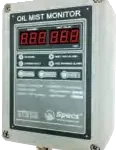
Overview
Engine room oil mist is a different problem from crankcase oil mist — and it demands a different type of detection. Where crankcase oil mist arises from within the sealed crankcase environment and is monitored through direct sampling of that enclosed atmosphere, engine room oil mist is the mist that escapes into the open engine room space itself: from seal failures, lube oil leaks onto hot surfaces, exhaust lagging contamination, and fuel system spray incidents. Engine room oil mist at sufficient concentration creates a fire and explosion risk in the open machinery space — and because the engine room is a large, ventilated, working environment rather than a sealed crankcase, detecting oil mist concentration rise in that space requires a different monitoring architecture than the crankcase detectors used on the engine itself.
The Specs Oil Mist Detector AOMD is Specs’ engine room ambient oil mist detection system — a panel-mounted monitoring unit designed to continuously detect and alarm on oil mist concentration in the open engine room atmosphere. The AOMD carries worldwide recognition for its quality and function as a dedicated engine room oil mist detection solution, and is part of a broader Specs monitoring product family that also includes the COMD (crankcase oil mist detector), the BWMS (bearing wear monitoring system), and the SEEMS (ship energy efficiency monitoring system).
What sets the AOMD apart from general-purpose gas or smoke detectors adapted for engine room oil mist duty is its specific design for the ambient oil mist detection application. The AOMD is engineered around the measurement challenge that the engine room environment presents: a large space with ventilation airflow, variable background contamination levels, and oil mist sources that can appear suddenly from a seal failure or lube oil system fault. Designing detection sensitivity, sampling architecture, and alarm threshold logic specifically for the engine room ambient application — rather than adapting a crankcase detector or a smoke detector to fill the role — is the engineering basis for the AOMD’s established recognition in the marine safety monitoring market.
Key Features
Dedicated Engine Room Ambient Oil Mist Detection
The AOMD is purpose-designed for ambient oil mist monitoring in the open engine room atmosphere — not a crankcase detector applied to the ambient monitoring application. The distinction matters because the concentration ranges, detection sensitivities, and alarm logic appropriate for a crankcase environment are different from those required for an open machinery space. The AOMD’s detection architecture is calibrated for the ambient application — providing appropriate sensitivity to oil mist concentration rise in the engine room atmosphere without generating nuisance alarms from the normal low-level oil vapour background present in any engine room.
Panel-Mounted Enclosure with Integrated Display and Controls
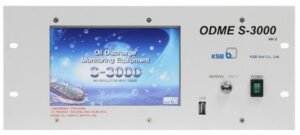
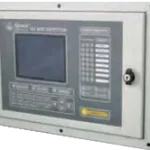
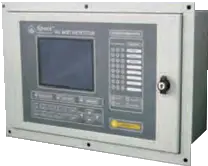
The AOMD is housed in a panel-mount enclosure with an integrated LCD or graphic display screen and a front-panel control and indicator layout. The panel-mount format allows the AOMD to be installed in the engine control room panel, the engine room local control station, or a dedicated machinery monitoring panel — integrating the oil mist monitoring function into the engineer’s existing instrument panel environment rather than adding a separate standalone unit. The front panel controls and display provide direct local access to monitoring data, alarm status, and system configuration without requiring a separate laptop or configuration terminal for routine operation.
Part of the Specs Integrated Engine Room Monitoring Family
The AOMD is developed and supported by Specs alongside a family of related engine room monitoring systems: the COMD crankcase oil mist detector, the BWMS bearing wear monitoring system, and the SEEMS ship energy efficiency monitoring system. For vessel operators and ship managers looking to standardise their engine room safety and performance monitoring on a single manufacturer’s platform, the Specs product family offers a consistent interface approach, a single service and support relationship, and the potential for integrated data sharing between monitoring systems from the same manufacturer. The AOMD fits within that broader monitoring architecture rather than standing as a single-function instrument with no upgrade path.
Bearing Wear Monitoring System (BWMS) Integration Capability
Specs’ BWMS is designed to predict bearing wear in two-stroke engines — monitoring crank-train bearings including crosshead, crank, and main bearings — and provides early warning alarm and slowdown signals before bearing wear reaches a critical condition. The AOMD’s development within the same Specs platform means that vessels deploying both systems benefit from a coherent engine monitoring architecture: ambient oil mist detection covering the engine room space, and bearing wear prediction covering the internal engine components most likely to generate that oil mist if they deteriorate. The combination addresses the engine room fire and machinery damage risk from two complementary monitoring angles.
SEEMS Integration — Energy Efficiency and Emission Monitoring
Specs’ SEEMS (Ship Energy Efficiency Monitoring System) collects real-time signals related to vessel operational efficiency and performance, calculates and displays EEOI and CO2 emission values in line with IMO guidelines, and presents daily, voyage, and sea trial reports with trend graphs across variable time periods. The AOMD’s development within the Specs platform means vessel operators deploying Specs monitoring systems benefit from a manufacturer who addresses both engine room safety monitoring and IMO-compliant energy efficiency reporting — with more than 150 different monitored data points available across the Specs system range. For vessels subject to CII (Carbon Intensity Indicator) reporting requirements, the SEEMS capability within the same platform as the AOMD represents a meaningful operational monitoring consolidation.
Continuous Automatic Monitoring with Alarm Output
The AOMD operates continuously and automatically, monitoring engine room oil mist concentration without requiring manual sampling cycles or periodic test procedures. Alarm outputs integrate with the vessel’s engine room alarm and monitoring system — providing bridge and ECR alerts when oil mist concentration in the engine room atmosphere rises above the pre-set threshold. For UMS-notated vessels, where the engine room operates without a permanent duty engineer watch during at-sea passages, continuous automatic monitoring with remote alarm output is a class requirement. The AOMD’s architecture satisfies that requirement for the ambient engine room oil mist monitoring function.
New and Refurbished Availability
The Specs AOMD is available in both new and refurbished condition. New units are appropriate for newbuild outfitting, class-required replacements, or fleet upgrades to the Specs monitoring platform. Refurbished units — inspected and tested before supply — provide a cost-effective option for in-service replacements on vessels where the existing ambient oil mist monitor has developed a fault and the operational or budget situation does not support full new-unit procurement. Both conditions are available through Alright Engineering Solutions with appropriate documentation for class survey purposes.
Technical Specifications
Maker: Specs
Model: AOMD
Description: Specs Ambient Oil Mist Detector AOMD
Application: Engine room ambient oil mist detection — open machinery space monitoring
Enclosure: Panel-mount with integrated display and front-panel controls
Monitoring Type: Continuous automatic ambient oil mist concentration monitoring
Alarm Output: Integration with engine room alarm and monitoring system
Platform: Part of Specs engine room monitoring family (COMD, BWMS, SEEMS)
Suitable Operation: UMS (Unmanned Machinery Space) compliant
Condition: New & Refurbished
Benefits
Dedicated ambient detection addresses a monitoring gap that crankcase detectors cannot fill. A crankcase oil mist detector monitors only the sealed crankcase atmosphere — it has no visibility of oil mist concentration in the open engine room space. A lube oil seal failure spraying oil onto hot exhaust lagging, a fuel system leak creating an atomised spray near a hot surface, or a purifier room lube oil overflow can all generate engine room oil mist at dangerous concentrations without triggering a crankcase alarm. The AOMD monitors the engine room atmosphere directly, providing detection coverage for oil mist sources that are invisible to crankcase monitoring systems.
Panel-mount integration keeps monitoring data within the engineer’s existing instrument environment. A standalone wall-mounted detector adds another location the engineer must check during rounds and during alarm response. Panel-mount integration of the AOMD brings ambient oil mist monitoring data into the instrument panel the engineer is already attending — reducing the risk of monitoring data being overlooked and supporting faster alarm response from the location where the engineer is already working.
Platform integration with BWMS and SEEMS supports a consolidated monitoring investment. Deploying the AOMD as part of a broader Specs monitoring platform — alongside the COMD, BWMS, and SEEMS — means vessel operators build a coherent engine room safety and performance monitoring capability around a single manufacturer and support relationship. That consolidation reduces the spare parts complexity, crew training burden, and service coordination effort associated with managing multiple monitoring systems from different manufacturers.
Supports UMS notation compliance for ambient engine room monitoring requirements. Class society requirements for UMS notation extend beyond crankcase monitoring to include broader engine room fire and safety monitoring. The AOMD’s continuous automatic monitoring with alarm output contributes to the engine room automatic monitoring capability required for UMS class notation — addressing the ambient oil mist monitoring component of UMS engine room safety requirements.
Worldwide recognition supports class acceptance and procurement confidence. The AOMD has achieved worldwide recognition for its quality and function in the engine room ambient oil mist detection application. For procurement teams sourcing an ambient oil mist monitor, that established market recognition reduces the uncertainty associated with sourcing from a manufacturer whose products are unfamiliar to class surveyors and engineering teams — and supports a smoother class survey acceptance process for the installed system.
Who It’s For
The Chief Engineer on a UMS Deep-Sea Vessel
Your engine room runs unattended on night watches during ocean passages. You have crankcase monitoring on the main engine, but you’ve always been aware that a lube oil system leak or a purifier overflow during the night watch could generate engine room oil mist at dangerous concentrations without triggering any existing alarm. You need an ambient oil mist monitoring system that continuously watches the engine room atmosphere during unmanned periods and triggers a bridge alarm if concentration rises — giving the officer on watch the information to call an engineer and investigate before a smouldering oil fire develops into a serious engine room casualty.
The Technical Superintendent Planning an Engine Room Monitoring Upgrade
You’re reviewing your fleet’s engine room monitoring capability as part of a safety management system improvement programme. You want to address the ambient oil mist monitoring gap — the engine room space coverage that crankcase detectors don’t provide — and you’re also evaluating the BWMS bearing wear prediction and SEEMS energy efficiency monitoring for potential fleet-wide deployment. Deploying the AOMD as part of a broader Specs monitoring package means a single manufacturer relationship, a consistent interface approach across monitoring systems, and the potential for integrated data management across safety and performance monitoring functions. Alright Engineering Solutions can discuss the full Specs monitoring family and assist with a fleet deployment programme.
The HSE Manager at a Ship Management Company
Your safety management system requires continuous engine room fire risk monitoring, and a recent internal audit has identified ambient oil mist detection as a gap in your fleet’s engine room monitoring coverage. You need a system with established class society acceptance, a clear installation and maintenance documentation trail, and a manufacturer with the market recognition that supports your procurement justification to senior management. The Specs AOMD’s worldwide recognition and its position within an established marine monitoring product family gives you the procurement justification and the class survey confidence your safety management programme requires.
Possible Applications
- Deep-sea cargo vessels operating under UMS notation — Continuous ambient engine room oil mist monitoring during unattended machinery space operation on ocean passages, providing bridge alarm capability for oil mist events that occur without a duty engineer present in the engine room
- Oil tankers and chemical tankers — Engine room ambient oil mist detection on tanker vessels where engine room fire risk management is subject to heightened class society and flag state scrutiny, and where oil cargo proximity makes engine room fire prevention a priority
- LNG and LPG gas carriers — Ambient oil mist monitoring on gas carrier engine rooms where comprehensive engine room safety monitoring standards are a class and flag state requirement for vessels carrying flammable gas cargoes
- Container ships and ro-ro vessels — Engine room oil mist monitoring on high-utilisation commercial vessels where engine room fire events create disproportionate commercial and schedule disruption alongside the direct safety consequences
- Offshore platform supply vessels and anchor handling tugs — Ambient engine room oil mist detection on offshore support vessels where class society requirements for engine room safety monitoring are rigorous and where engine room fire events in offshore locations carry elevated rescue and response complexity
- Passenger ferries and cruise vessels — Engine room ambient oil mist monitoring on passenger vessels where engine room fire safety standards are subject to the most stringent flag state and class society requirements in the commercial marine sector
- Integrated Specs monitoring platform deployments — AOMD installation as the engine room ambient component of a broader Specs monitoring deployment alongside COMD, BWMS, and SEEMS systems on vessels standardising their engine room monitoring on the Specs platform
- Fleet upgrade programmes addressing ambient monitoring gaps — Retrofit installation of AOMD systems on vessels identified through safety management system audits as lacking dedicated ambient engine room oil mist detection coverage
Trust and Certifications
Worldwide Recognition for AOMD and COMD Quality and Function
Specs has achieved worldwide recognition for the quality and function of both its engine room ambient oil mist detector (AOMD) and its crankcase oil mist detector (COMD). That recognition reflects an established installation base across global commercial fleets and the operational track record that comes with sustained deployment across different vessel types, engine configurations, and operating environments. For procurement teams and HSE managers evaluating oil mist monitoring options, worldwide market recognition from an established marine monitoring specialist is a meaningful indicator of product reliability and class acceptability — and reduces the procurement risk associated with introducing a new monitoring system into a vessel’s safety-critical equipment inventory.
Class Society Acceptance — Engine Room Safety Monitoring
Ambient engine room oil mist monitoring systems installed on classed vessels are subject to class society review as part of machinery surveys and UMS notation assessments. The Specs AOMD is designed to meet engine room ambient oil mist detection requirements for commercial vessels as specified by the major international classification societies — including Lloyd’s Register, DNV, Bureau Veritas, ClassNK, and ABS. Procurement teams sourcing an AOMD for installation on a classed vessel should confirm applicable class documentation requirements with Alright Engineering Solutions before ordering — our team can provide documentation support for class survey purposes.
SOLAS — Engine Room Fire Safety Requirements
SOLAS Chapter II-2 addresses fire protection, detection, and extinction requirements for engine rooms on commercial vessels, including requirements for continuous automatic fire detection systems in unattended machinery spaces. Ambient oil mist detection forms part of the engine room fire risk monitoring capability relevant to SOLAS II-2 compliance for UMS operation. The AOMD’s continuous automatic monitoring architecture contributes to the engine room fire detection capability required under SOLAS for vessels with unattended machinery space operation.
IMO EEOI and CII Compliance Support via SEEMS
Vessels deploying the Specs SEEMS system alongside the AOMD benefit from IMO-compliant EEOI and CO2 emission calculation and reporting capability within the same monitoring platform. As IMO CII (Carbon Intensity Indicator) rating requirements increase the operational significance of fuel consumption and emissions monitoring for commercial vessels, the SEEMS capability within the Specs monitoring family provides a direct pathway to compliant energy efficiency reporting — without requiring a separate energy monitoring system from a different supplier.
Supplied Through Alright Engineering Solutions — Authorised Singapore Distributor
The Specs Oil Mist Detector AOMD is supplied through Alright Engineering Solutions Pte. Ltd., an authorised distributor of marine engine room safety and monitoring equipment based in Singapore. Alright Engineering Solutions provides procurement support, class documentation assistance, and marine safety equipment sourcing services for vessel operators, ship managers, and procurement teams across the Singapore and Southeast Asia region — with delivery capability to vessels in port and at regional ship repair and drydock facilities.
Accessories and Variants
Specs COMD — Crankcase Oil Mist Detector
The Specs COMD is the crankcase-specific complement to the AOMD — designed for direct crankcase atmosphere monitoring on the main engine. Deploying both the AOMD for engine room ambient monitoring and the COMD for crankcase monitoring provides comprehensive oil mist detection coverage across both the engine’s internal crankcase environment and the surrounding engine room space. Contact Alright Engineering Solutions to discuss combined AOMD and COMD procurement for comprehensive engine room oil mist monitoring coverage.
Specs BWMS — Bearing Wear Monitoring System
The Specs BWMS monitors crank-train bearing wear on two-stroke diesel engines — including crosshead, crank, and main bearings — providing early warning alarm and slowdown signals before bearing wear reaches a critical condition. The BWMS addresses the mechanical root cause of many engine room oil mist events: bearing wear leading to lube oil system irregularities that generate oil mist in the crankcase or engine room. Deploying the BWMS alongside the AOMD addresses both the early-stage bearing condition and the resulting oil mist consequence within a single monitoring platform.
Specs SEEMS — Ship Energy Efficiency Monitoring System
The Specs SEEMS collects real-time operational efficiency data, calculates EEOI and CO2 values per IMO guidelines, and presents daily, voyage, and sea trial reports with over 150 monitored data points. For vessel operators subject to CII reporting requirements, SEEMS provides an integrated efficiency monitoring capability within the same Specs platform as the AOMD — reducing the number of separate monitoring systems and supplier relationships required to meet both safety and regulatory performance monitoring obligations.
Replacement Sensing and Sampling Components
Alright Engineering Solutions can assist with sourcing replacement optical sensing elements, sampling components, and maintenance spares for the Specs AOMD. Maintaining sensing element cleanliness and calibration is essential for reliable ambient oil mist detection — contact our technical team with your installation details for compatible parts availability and maintenance support.
Get in Touch
If you need to source the Specs Oil Mist Detector AOMD — for a UMS monitoring upgrade, an engine room safety system retrofit, or as part of a broader Specs monitoring platform deployment — contact Alright Engineering Solutions to confirm availability, discuss your vessel’s specific monitoring requirements, and request a formal quotation.
Our team can also advise on the full Specs monitoring family — including COMD, BWMS, and SEEMS — and support integrated procurement for vessels looking to consolidate their engine room monitoring on a single platform.
📍 3791 Jalan Bukit Merah #06-01, E-Centre @ Redhill, Singapore 159471