Cart (
Overview
In a man-overboard situation, the first critical challenge is not rescue — it is location. A casualty in the water at night, in reduced visibility, or in rough sea conditions can be within shouting distance of the vessel and still be impossible to locate visually without a reliable, active light source attached to their life jacket. The seconds and minutes immediately following a man-overboard event are the period when a functioning lifejacket light makes the difference between a rapid visual sighting and an extended search — and in cold water, an extended search is not a delay, it is a fatality risk.
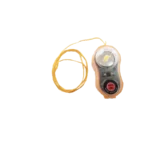
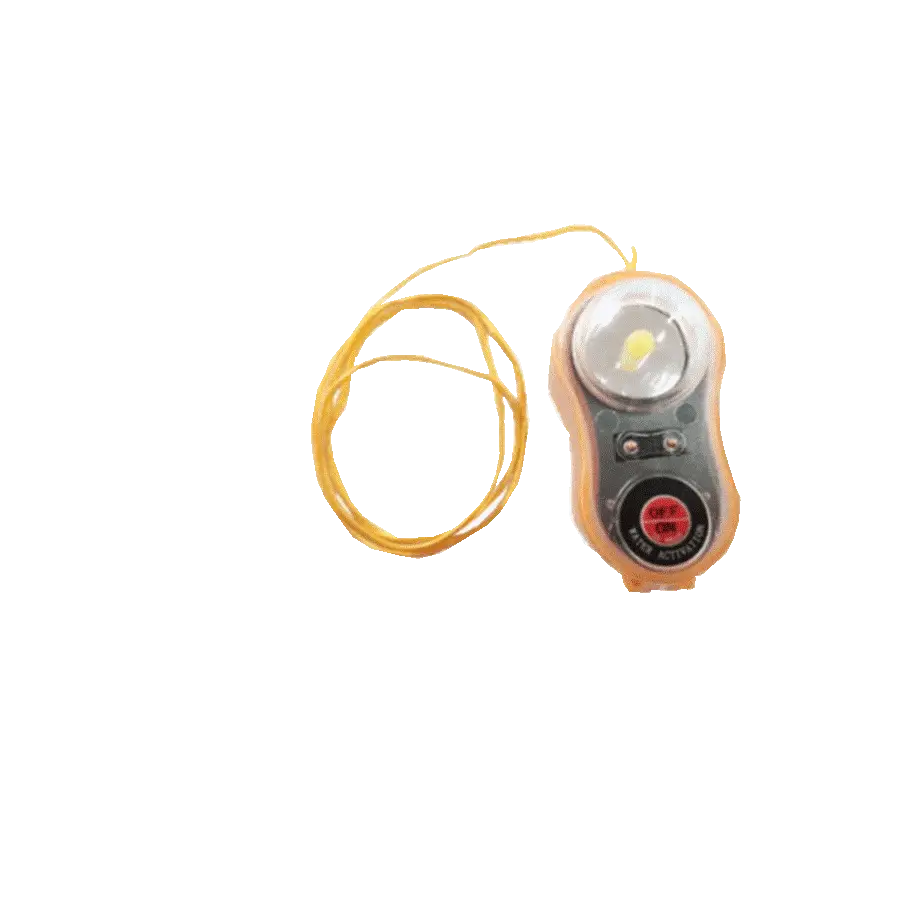
The SOLAS LED Lifejacket Light is a compact, automatically activated white LED distress light designed to be permanently attached to a life jacket as a standard life-saving appliance fitting. With a luminous intensity of not less than 0.75 candela, a flash frequency of 50–70 flashes per minute, and a minimum operational lighting period of 8 hours, it meets the performance requirements of SOLAS regulations for personal life-saving appliance lighting — ensuring that every person who enters the water wearing a correctly equipped life jacket carries an active, compliant visual distress signal.
What separates a properly specified lifejacket light from an unverified alternative is the combination of luminous intensity, flash pattern, and battery duration meeting international standards — not just manufacturer claims. Procurement teams specifying lifejacket lights for commercial vessel inventories, offshore installations, and port facility life jacket stocks need a unit whose performance specification satisfies flag state, classification society, and port state control requirements — and whose compliance can be documented. This unit provides that specification.
Key Features
High-Power LED Light Source — Reliable Illumination Without Bulk
The lifejacket light uses a powerful LED as its primary light source. LED technology in marine distress lighting provides a combination of advantages that older incandescent bulb designs cannot match: lower power consumption extends battery life, the solid-state light source has no filament to fail under water entry impact, and LED output is consistent from initial activation through to end of battery life rather than gradually dimming. For a life-saving appliance that must perform reliably at the moment it is most needed — and continue performing for a minimum of 8 hours without maintenance — LED technology is the appropriate choice.
≥0.75 cd Luminous Intensity — SOLAS-Compliant Visibility Standard
The light produces a minimum luminous intensity of 0.75 candela — the performance threshold specified by SOLAS regulations and the IMO’s Life-Saving Appliances (LSA) Code for personal life-saving appliance lights. The 0.75 cd minimum is not an arbitrary figure: it represents the luminous intensity determined to provide adequate visibility of a casualty in the water at a range sufficient for a vessel’s bridge watch or rescue team to establish a visual bearing in typical maritime conditions. Lights that do not meet this threshold may appear to function but will not provide the visibility required under actual search and rescue conditions at night or in reduced visibility.
50–70 Flashes Per Minute — Flash Pattern for Human Eye Detection
The flash frequency of 50–70 flashes per minute is specified to optimise detection by the human eye at distance and in cluttered visual environments. A flashing light is significantly more detectable against a dark or wave-covered water surface than a steady light — the periodic change in luminance draws the eye in a way that a constant light source does not. The 50–70 flash per minute rate falls within the range specified by SOLAS and IMO LSA Code requirements for personal life-saving appliance lights, ensuring the unit’s flash pattern meets the regulatory performance standard as well as the practical detectability requirement.
≥8 Hour Operational Period — Search Duration Coverage
The light is rated for a minimum operational period of 8 hours from activation. SOLAS Chapter III regulations specify a minimum 8-hour lighting period for life jacket lights — a duration intended to cover the extended search period that may follow a man-overboard incident in adverse conditions, at night, or in remote waters where rescue response times are longer. A light that fails before the search is concluded provides no benefit to a casualty who remains in the water. The ≥8 hour specification is the regulatory minimum, and meeting it with verified performance rather than nominal specification is the critical procurement criterion.
White Light — International Standard Casualty Identification Colour
The light output is white — the colour specified by SOLAS and IMO LSA Code for personal life-saving appliance lights. White light provides the best visibility against dark water at night and in low-visibility conditions, and is the internationally standardised colour for man-overboard signalling via personal life-saving appliance lights. This distinguishes lifejacket lights from vessel navigation lights (red, green, white) and other distress signals, providing a clear and unambiguous identification of a casualty’s position to rescue personnel.
Compact Form Factor with Attachment Cord — Permanent Life Jacket Fitting
The light’s compact form factor and integrated attachment cord allow it to be permanently fitted to a life jacket as a standard equipment component — not carried separately or added at the point of donning. A lifejacket light that must be separately retrieved and attached when a man-overboard alarm is raised will frequently not be attached in time. A permanently fitted light that activates automatically on water immersion eliminates that failure mode. The attachment cord secures the light to the life jacket while allowing it to orient for maximum upward light projection when the vest is inflated and the wearer is in the water.
Automatic Water-Activated Trigger — No Manual Intervention Required
The light is designed for automatic activation on water immersion — meaning the light activates without any action required from the wearer. In a man-overboard incident involving an unconscious casualty, a casualty in cold water shock, or a casualty who has entered the water in darkness or confusion, manual activation of distress equipment cannot be assumed. An automatically activated lifejacket light provides distress signalling from the moment the wearer enters the water, regardless of the casualty’s physical or mental state — the fundamental safety advantage of automatic over manual activation for personal life-saving appliance lighting.
Technical Specifications
Product: Lifejacket Light
Category: Life Jacket / Personal Life-Saving Appliance
Light Source: Powerful LED
Chromaticity: White
Luminous Style: Flash
Luminous Intensity: ≥ 0.75 cd
Flash Frequency: 50–70 Flashes / min
Lighting Period: ≥ 8 Hours
Activation: Automatic (Water-Activated)
Regulatory Standard: SOLAS / IMO LSA Code
Application: Life Jacket / Immersion Suit / Life Ring Fitting
Benefits
The practical safety outcome of specifying a compliant lifejacket light across a vessel’s or installation’s entire life jacket inventory is straightforward: every person who enters the water carrying a correctly equipped life jacket is immediately and continuously visible to rescue personnel for the duration of the search — without any action required from the casualty. That passive, automatic visibility capability is the fundamental benefit this equipment provides, and it operates regardless of whether the casualty is conscious, injured, in cold water shock, or exhausted.
From a regulatory compliance standpoint, SOLAS Chapter III requires that life jackets carried on commercial vessels be fitted with a light meeting the IMO LSA Code performance specification — including the 0.75 cd luminous intensity, 50–70 flash per minute rate, and 8-hour minimum operational period. Specifying a lifejacket light that meets these parameters provides the compliance basis for flag state surveys, classification society inspections, and port state control examinations. Non-compliant or unverified lights create a documentation gap that can result in deficiency notices, detention orders, or insurance coverage complications following an incident.
For procurement teams managing large life jacket inventories across a fleet or multi-site operation, the compact form factor, standard attachment configuration, and battery-based operation of this unit simplifies both initial fitting and ongoing maintenance management. Routine service consists of battery replacement at the manufacturer’s specified interval — a straightforward task that can be carried out by vessel crew or facility maintenance personnel without specialist equipment or contractor support.
Who It’s For
Vessel Safety Officers — SOLAS Life Jacket Inventory Compliance
A Safety Officer managing the life-saving appliance inventory on a commercial cargo vessel, tanker, or passenger ship is required under SOLAS Chapter III to ensure that every life jacket carried on board is fitted with a light meeting IMO LSA Code performance requirements. During annual surveys and port state control inspections, surveyors check that life jacket lights are present, serviceable, and within their battery service life. A Safety Officer specifying this unit for the vessel’s inventory can produce a clear product specification and compliance basis — and demonstrate to the surveyor that the lights fitted meet the 0.75 cd / 50–70 flash / 8-hour performance standard required.
Offshore HSE Managers — Platform and Installation Life Jacket Equipment
HSE managers at offshore oil and gas platforms, wind farm installation vessels, and subsea construction sites are responsible for ensuring that all personnel working near open water are equipped with compliant personal life-saving appliances — including correctly specified life jacket lights. In offshore environments where man-overboard response may involve helicopter search and rescue as well as fast rescue craft, a correctly rated flashing white light operating for a minimum of 8 hours provides the visual reference point that coordinates multi-asset search operations. The HSE manager specifying this unit for the installation’s life jacket stock is providing the search and rescue teams with the signalling equipment they need to locate a casualty in the water under adverse conditions.
Marine Safety Equipment Suppliers and Ship Chandlers — Stock Specification
Marine safety equipment suppliers and ship chandlers supplying life jacket lights to commercial vessel operators, ferry operators, and offshore contractors need to stock units whose specification can be confirmed to meet SOLAS requirements — and whose compliance documentation can be provided to customers for their safety management system records. Stocking a unit with a verified specification of ≥0.75 cd, 50–70 flashes per minute, and ≥8 hours operational period provides the supplier with a product that can be recommended with confidence to any commercial maritime customer.
Possible Applications
Commercial Cargo Vessel Life Jacket Inventory — Crew Life Jackets
Crew life jackets on cargo vessels, tankers, bulk carriers, and container ships are required under SOLAS Chapter III to be fitted with compliant lights. The lifejacket light is fitted to each crew life jacket as a standard component and replaced at the manufacturer’s specified battery service interval — typically annually or as part of the life jacket’s scheduled service.
Passenger Vessel and Ferry Operations — Passenger Life Jacket Fittings
Passenger life jackets on ferries, cruise vessels, and passenger ships are required to carry compliant lights under SOLAS Chapter III. With large numbers of passenger life jackets to maintain and service, a straightforward, reliable unit with a well-documented specification simplifies fleet-scale service management and compliance verification during flag state and classification society surveys.
Offshore Platform Emergency Life Jacket Stations
Life jackets stored at emergency muster stations on offshore oil and gas platforms, wind farm substations, and floating production units are required to be fully equipped and serviceable at all times. Lifejacket lights fitted to platform emergency life jackets must meet SOLAS and offshore regulatory requirements — and must be within their battery service life at every muster station inspection.
Life Ring and Buoyancy Aid Fittings — Deck and Quayside Equipment
In addition to life jacket fittings, this type of light is commonly fitted to life rings and buoyancy aids positioned at deck rails, quayside life ring stations, and port facility water edge safety points. A life ring light provides a visual reference for both the casualty in the water and the vessel crew throwing the ring — particularly in low-light or night-time conditions.
Immersion Suit Fittings — Cold Water Survival Equipment
Immersion suits carried on vessels operating in cold water regions — North Sea, Arctic, North Atlantic — are required to carry compliant lights in the same way as life jackets. Life jacket lights are commonly specified for immersion suit fittings, providing a single consistent product across both personal life-saving appliance types in the vessel’s inventory.
Fast Rescue Craft and Rescue Boat Equipment
Life jackets stored aboard fast rescue craft and rescue boats for use by rescue crews during man-overboard recovery operations require compliant lights. Rescue crew life jackets are a separate inventory from crew accommodation life jackets and are subject to the same SOLAS equipment requirements — including fitted lights meeting LSA Code performance standards.
Port Facility and Harbour Authority Safety Equipment
Port facility operators, harbour authorities, and marine terminal operators maintaining life jackets for use by shoreside personnel working near the water’s edge are subject to occupational health and safety regulations that specify compliant personal flotation equipment. Life jacket lights fitted to port facility life jackets ensure compliance with both maritime and workplace safety requirements applicable to water-adjacent work environments.
Trust & Certifications
SOLAS Chapter III — International Convention Life-Saving Appliance Requirements
The International Convention for the Safety of Life at Sea (SOLAS) Chapter III establishes the requirements for life-saving appliances carried on commercial vessels, including the performance standards for lights fitted to life jackets and other personal life-saving appliances. SOLAS Chapter III compliance is mandatory for commercial vessels above the applicable gross tonnage thresholds, and is verified during flag state surveys, classification society annual surveys, and port state control inspections. A lifejacket light meeting SOLAS Chapter III requirements — including the luminous intensity, flash frequency, and operational duration specified in the IMO LSA Code — provides the compliance basis for these inspections.
IMO LSA Code — Life-Saving Appliances Performance Standards
The International Maritime Organization’s Life-Saving Appliances (LSA) Code provides the detailed performance requirements for all life-saving appliances carried under SOLAS Chapter III, including personal life-saving appliance lights. The LSA Code specifies that life jacket lights must produce a minimum luminous intensity of 0.75 cd, must flash at a rate of not less than 50 and not more than 70 flashes per minute, and must operate for a minimum of 8 hours. These are the performance parameters that this lifejacket light is specified to meet — providing direct traceability between the product specification and the IMO regulatory requirement that procurement teams and Safety Officers need to document for compliance purposes.
Flag State and Classification Society Recognition
Life-saving appliances carried on commercial vessels are subject to type approval by recognised organisations — typically the vessel’s classification society or a body recognised by the flag state administration — before they can be used to satisfy SOLAS Chapter III requirements. Procurement teams should verify that the specific lifejacket light unit they are sourcing carries the type approval documentation required by their vessel’s flag state and classification society. Type approval documentation should be retained as part of the vessel’s safety management system records and made available for inspection during surveys.
Battery Service Life Management — Compliance Documentation
SOLAS and classification society requirements for life jacket lights include maintenance of service records demonstrating that batteries have been replaced within the manufacturer’s specified service interval. A battery that has exceeded its service life — even if still functional — represents a compliance deficiency that surveyors will identify during inspection. Establishing a documented battery replacement schedule aligned to the manufacturer’s service interval, and maintaining replacement records for each life jacket in the inventory, is the compliance management practice that Safety Officers and HSE managers need to implement alongside the initial equipment procurement.
Accessories & Variants
Replacement Battery
Replacement batteries compatible with the lifejacket light should be stocked to support the annual or manufacturer-specified battery replacement service. Using the correct replacement battery specification is essential to maintain the ≥8 hour operational period rating — an incorrect battery may provide reduced runtime that does not meet the SOLAS performance requirement. Confirm the correct battery type and specification with your supplier at the point of procurement.
Life Jacket Service Kit
For organisations maintaining large life jacket inventories, a complete life jacket service kit including replacement lifejacket lights, batteries, inflation cartridges, and bobbins simplifies annual service management and ensures that all service consumables are available when the service schedule falls due. A consolidated service kit reduces the risk of delayed service due to individual component unavailability.
Life Ring Light Variant
Life ring lights are a related product for fitting to life rings at deck rail stations, quayside positions, and port facility water-edge points. Life ring lights operate on the same water-activation principle as lifejacket lights and must meet similar SOLAS and IMO LSA Code performance requirements. Where a supplier is sourcing lifejacket lights for vessel inventory, sourcing life ring lights from the same supplier simplifies service documentation and ensures consistent specification across the vessel’s personal life-saving appliance inventory.
Available Application Variants
Life Jacket Fitting — Standard configuration for attachment to crew and passenger life jackets on commercial vessels
Immersion Suit Fitting — For cold water survival suit inventories on vessels operating in Arctic, North Atlantic, and North Sea trading areas
Life Ring Fitting — For deck rail life ring stations and quayside life-saving appliance positions at port facilities and marine terminals
Get in Touch
If you are specifying lifejacket lights for a commercial vessel’s SOLAS life jacket inventory, an offshore installation’s emergency life-saving appliance stock, or a port facility’s water-edge safety equipment — or if you need to confirm type approval documentation, battery service specifications, or volume pricing for fleet-scale procurement — contact us to discuss your requirement.
Our team can assist with compliance documentation, confirm the correct specification for your flag state and classification society requirements, and support procurement planning for annual service schedules across large life jacket inventories.
📍 3791 Jalan Bukit Merah #06-01, E-Centre @ Redhill, Singapore 159471