Cart (
Overview
In fixed gas detection, the reliability of the instrument over the long term matters more than almost any other specification. A fixed detector installed in a refinery, a marine engine room, or a wastewater treatment plant is not swapped out after a shift — it sits in place, exposed to the specific atmospheric conditions of its installation environment, continuously for months or years at a time. Sensor stability, resistance to false alarms, and the ability to operate without failure across that exposure period are what determine whether a fixed detector is genuinely protecting workers or simply providing the appearance of coverage.
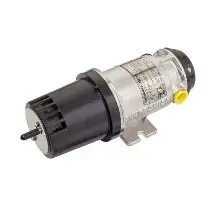
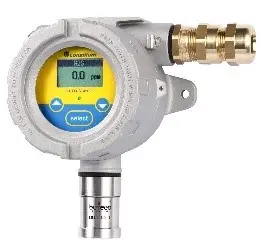
The Consilium ST450 EC is a fixed electrochemical gas detector designed with this long-term reliability requirement as its primary engineering priority. The heart of the detector is a replaceable gas sensor, available for Oxygen, Toxic gases and Hydrogen, with a measuring principle based on an electrochemical sensor developed to meet the highest standards, with outstanding stability that achieves long-term reliability. The high selectivity of the sensors minimises false readings — a specification that matters considerably in industrial environments where interfering gases are routinely present alongside the target gas being monitored.
Manufactured by Consilium Safety — a Swedish safety systems company with decades of experience supplying gas detection, fire detection, and integrated safety systems to the marine, offshore, and industrial sectors globally — and supplied by Alright Engineering Solutions Pte Ltd, Singapore-based authorised distributors of fixed gas detection equipment serving the maritime and industrial sectors across the Asia-Pacific region, the ST450 EC differentiates itself from comparable fixed electrochemical detectors through one specific capability: it is Ex d and Ex t approved under both ATEX and IECEx, making it useful in both GAS and DUST zones. Most fixed toxic and oxygen detectors carry only Ex d gas zone approval. The additional Ex t dust zone certification means the ST450 EC can be installed in classified explosive dust atmospheres — grain silos, flour mills, coal handling facilities, pharmaceutical manufacturing — without requiring a separate detector specifically rated for dust zones.
Key Features
1. Electrochemical Sensor Technology — High Selectivity, Long-Term Stability
The ST450 EC uses electrochemical sensing — the established gold standard for fixed toxic gas and oxygen detection in industrial and marine safety applications. The sensor type is electrochemical using 2 or 3 electrodes depending on the gas type. Electrochemical sensors provide the combination of high sensitivity at low ppm concentrations, good selectivity against interfering gases, and a stable, predictable output over a multi-year operational life that make them the preferred technology for fixed safety-critical gas detection across oil and gas, marine, chemical, and process industries. The ST450 EC’s sensor is designed for outstanding long-term stability — reducing the frequency of zero drift and span drift events that require maintenance calibration interventions and temporarily take the monitoring point offline.
2. Replaceable Sensor Design — Field Serviceability Without Instrument Replacement
The ST450 EC’s gas sensor is a replaceable module — field-serviceable without requiring the complete detector assembly to be removed, returned for service, or replaced. When a sensor reaches the end of its operational life or requires replacement following exposure to a high-concentration gas event, a new sensor module is installed in the field, the detector is recalibrated, and the monitoring point is returned to service. For facilities managing multiple fixed detection points across a large installation, field-replaceable sensors significantly reduce the maintenance overhead and downtime associated with sensor lifecycle management — the monitoring point can be restored within a calibration visit timeframe rather than waiting for a replacement detector to be sourced and installed. This design also means the aluminium housing and electronics — which have a longer service life than the sensor itself — are retained, reducing the total cost of sensor lifecycle management over the instrument’s operational life.
3. Graphic Display with Capacitive Key Control — Touchscreen-Like Operation
The ST450 EC comes standard with a graphic display that shows the measured value and various status notifications locally. The capacitive key control gives an experience similar to a touchscreen and enables easy navigation through the user and calibration menu. For maintenance technicians performing calibration, alarm setpoint checks, and diagnostic reviews at the detector head, this touchscreen-style interface removes the need for additional tools, switches, or magnetic wand calibration methods that require opening the enclosure. Status LEDs provide at-a-glance operational status: Green for OK, Red for alarm, and Yellow for system failure — visible from a distance during routine monitoring rounds without reading the display. The graphic display with backlight is readable in the low-light conditions of plant rooms, below-deck marine spaces, and outdoor night operations.
4. Dual Output — 4–20mA Analogue and RS485 MODBUS RTU
The ST450 EC outputs both 4–20mA analogue and RS485 MODBUS RTU half-duplex digital signals simultaneously. The 4–20mA output connects directly to any compatible gas alarm controller, safety PLC, DCS analogue input, or panel meter — the universal standard for analogue gas transmitter integration. A 2mA output indicates system failure and a greater-than-20mA output indicates over-range, providing fault indication and over-range signalling within the standard 4–20mA loop without additional discrete outputs. The RS485 MODBUS RTU digital output carries full measurement data, alarm status, and device diagnostics to supervisory systems and SCADA platforms. The load impedance maximum is 300Ω at 24V DC — the standard loop impedance limit for long cable run installations in large industrial facilities and marine vessels.
5. Ex d and Ex t Dual Certification — Gas and Dust Zone Approved
The ST450 EC is Ex d and Ex t approved under both ATEX and IECEx, making the sensor an all-round gas detector useful in both GAS and DUST zones. Ex d (flameproof) certification means the detector’s aluminium enclosure contains any internal ignition without propagating an explosion to the surrounding atmosphere — the standard protection concept for fixed electrical equipment in gas-classified zones. Ex t (dust ignition protection) certification confirms the enclosure’s surface temperature and ingress protection rating prevent ignition of surrounding combustible dust clouds. The combination of both certifications in a single instrument means the ST450 EC can be specified for hazardous area installations without additional assessment of whether the installation’s primary classification is gas-zone or dust-zone — it covers both.
6. Wide Detection Range Options — H2S, O2, CO, and Hydrogen
The ST450 EC is available for Oxygen (O2, 0–25 Vol%), Hydrogen sulphide (H2S, 0–30/50/100 ppm), Carbon monoxide (CO, 0–500 ppm), and Hydrogen (H2, 0–1,000 ppm or 0–100% LEL). The availability of multiple H2S detection ranges — 0–30 ppm, 0–50 ppm, and 0–100 ppm — allows the specific range to be matched to the H2S concentrations expected at the installation location. A 0–30 ppm range provides maximum resolution and sensitivity at the low end of the detection range, relevant for environments where H2S concentrations rarely exceed 20–30 ppm but must be detected accurately at the 1–5 ppm alarm level. A 0–100 ppm range is appropriate for environments where periodic higher concentrations are expected. Matching the detection range to the application provides the best possible measurement accuracy at the alarm setpoints that matter for that specific location.
7. No Zener Barrier Required — Simplified Installation Wiring
The ST450 EC is ATEX/IECEx approved for use in explosive environments without a zener barrier. Zener barriers are passive safety components required in some intrinsically safe (Ex ia) installations to limit the electrical energy available in the hazardous zone to safe levels. While effective, zener barriers add hardware, wiring terminals, and documentation requirements to a fixed detector installation. The ST450 EC’s Ex d flameproof certification eliminates this requirement — the detector connects directly to its power supply and signal cable without additional barrier hardware in the hazardous zone wiring, simplifying installation, reducing component count, and removing a potential maintenance point from the system.
8. Self-Diagnostics with System Failure Output
The ST450 EC incorporates self-diagnostic monitoring that continuously checks sensor function, circuit integrity, and communication status during normal operation. When a fault condition is detected — sensor end-of-life, circuit failure, power supply issue, or communication error — the yellow system failure LED activates and the 4–20mA output drops to 2mA, providing both a local visual indication and a detectable signal change on the connected control system that something requires attention at the detector. For facilities managing multiple fixed detection points, the ability to receive automatic fault notification through the signal output — without waiting for a scheduled maintenance check — means faults are identified and addressed before they result in extended periods of undetected monitoring gaps.
Technical Specifications
Model: Consilium ST450 EC (Part No. 5150135-00 for H2S 0–100 ppm, Aluminium Enclosure — Supplied by Alright Engineering Solutions Pte Ltd)
Gas Types Available: H2S (0–30/50/100 ppm), O2 (0–25 Vol%), CO (0–500 ppm), H2 (0–1,000 ppm / 0–100% LEL)
Sensor Type: Electrochemical — 2 or 3 electrodes depending on gas type
Display: Digital graphic display with backlight; capacitive key control (touchscreen-like navigation); Status LEDs: Green (OK), Red (Alarm), Yellow (System Failure)
Power Supply: 17.5–24V DC (max. 25 mA)
Output Signal: 4–20mA analogue; RS485 MODBUS RTU (half-duplex); 2mA = system failure; >20mA = over-range
Load Impedance: Max. 300Ω at 24V DC
Signal Cable: 2-wire shielded, 0.75–2.5mm²
Cable Gland: Brass (aluminium housing) / SS (SS housing), thread M20×1.5
Housing Material: Aluminium (standard) or Stainless Steel
Operating Temperature: -20°C to +55°C (see ordering information for gas-specific range)
Operating Pressure: 80–120 kPa
Operating Humidity: 5–95% RH
Warm-Up Time: 180 seconds
IP Rating: IP66/IP67 (aluminium housing)
Safety Approvals: ATEX and IECEx — Ex d (flameproof) and Ex t (dust ignition protection) — approved for gas and dust hazardous zones
Standards: EN 50104:2010, EN 50271:2010
Installation: Vertical — sensor pointing downwards; wall-mounted
Battery: Not applicable — DC mains powered, continuous operation
Data Logging: Via connected supervisory system through RS485 MODBUS RTU interface
Wireless Connectivity: None (4–20mA and RS485 hardwired outputs)
Sensor Design: Replaceable sensor module — field-serviceable
Warranty: 1 year
Benefits
The long-term sensor stability of the ST450 EC’s electrochemical sensor design translates directly into reduced maintenance intervention frequency — fewer scheduled calibration visits driven by sensor drift, fewer false alarm events requiring investigation, and a longer interval between sensor replacement cycles compared with less stable electrochemical designs. For facilities with large numbers of fixed detection points — an offshore platform, a refinery, a marine vessel with multiple monitored spaces — the cumulative maintenance reduction across a fleet of ST450 EC detectors represents a meaningful reduction in the ongoing operational cost of the gas detection system.
The dual Ex d / Ex t certification removes a common specification complexity from the procurement process. In facilities where classified areas include both gas zones and dust zones — chemical plants handling both solvent vapours and fine powder dusts, food processing facilities with both refrigerant gases and grain dusts, coal handling facilities with both methane and coal dust — a single detector model certified for both zone types can be standardised across the installation. This eliminates the need to maintain two different detector models for different hazardous area classifications, simplifying procurement, spares management, and maintenance training.
The absence of a zener barrier requirement simplifies the installation design and reduces the hardware count per detector point. In a large fixed gas detection installation with dozens of monitoring points, eliminating zener barriers from each point reduces the bill of materials, the panel space required for barrier mounting, and the inspection and testing requirements associated with each barrier during periodic safety system audits. Over a full installation, this simplification produces a measurable reduction in installation cost and ongoing maintenance burden.
The 2mA fault output and yellow system failure LED provide automatic fault notification through both the local display and the connected control system signal loop, without requiring any additional discrete fault output wiring. For facilities integrating the ST450 EC into a SCADA or DCS platform via the 4–20mA signal, the 2mA fault indication is detectable by the control system’s analogue input monitoring — flagging a detector fault as a data point in the supervisory system without requiring a separate hardwired fault signal circuit to each detector location.
Who It’s For
Marine and Offshore Safety Engineers Specifying Fixed Toxic Gas Detection: Consilium Safety has decades of established presence in the marine and offshore safety systems market — the ST450 EC is a known and accepted detector in marine gas detection specifications. For marine engineers specifying fixed H2S and O2 monitoring in engine rooms, cargo pump rooms, battery spaces, and enclosed deck areas on vessels, the ST450 EC provides the ATEX/IECEx certification, 4–20mA output compatibility with marine gas alarm panels, and proven long-term reliability in shipboard environments that marine safety specifications require. The aluminium or stainless steel housing options cover the corrosion resistance requirements of both sheltered below-deck spaces and exposed above-deck installations.
Process Safety Engineers in Refineries and Chemical Plants: For fixed H2S monitoring at process equipment locations, tank vents, pump seals, and heat exchanger areas in oil and gas processing facilities, the ST450 EC’s multiple H2S detection range options allow precise range selection for each monitoring point — 0–30 ppm where low-level alarm sensitivity is the priority, 0–100 ppm where periodic high-concentration events must be measured without over-range. The dual Ex d/Ex t certification means the same detector model can be used across gas-classified process areas and any adjacent dust-classified areas without model changes in the procurement specification.
HSE Managers at Wastewater Treatment, Food Processing, and Steel Industry Facilities: In wastewater treatment plants where H2S from biological decomposition and O2 deficiency in pump stations and digesters are concurrent fixed monitoring requirements, and in food processing and silo storage facilities where dust explosion classifications apply alongside gas hazards, the ST450 EC covers both monitoring requirements and both zone classifications from a single detector platform. The replaceable sensor design supports the long-term sensor lifecycle management that is standard practice in these industries, where fixed detectors are expected to remain in service for five or more years with periodic sensor replacement rather than full detector replacement.
Possible Applications
Marine Vessel — Engine Rooms and Cargo Pump Rooms: Fixed H2S and O2 monitoring in enclosed vessel spaces where hydrogen sulphide from cargo residues and oxygen deficiency from inert gas blanketing are continuous monitoring requirements under SOLAS and class society gas detection standards.
Offshore Platforms — Process and Utility Areas: Fixed H2S monitoring at process equipment locations, wellhead areas, and utility spaces on offshore oil and gas platforms — where H2S from produced fluids is a primary toxic gas hazard requiring continuous fixed-point monitoring at multiple locations across the platform deck.
Wastewater Treatment Plants — Pump Stations and Digesters: Fixed H2S monitoring in pump station wet wells, digester buildings, sludge handling areas, and below-grade access structures where biological decomposition of organic matter produces continuous H2S generation requiring permanent fixed-point monitoring.
Refineries — Process Area H2S Monitoring: Fixed H2S detection at heat exchangers, pump seal areas, tank vents, and process equipment in crude oil refining operations where H2S is a process gas hazard at multiple concentration levels across different process units.
Food Industry and Silo Storage: Fixed O2 monitoring in grain silos, food storage facilities, and controlled atmosphere cold stores where oxygen deficiency from CO2 injection or nitrogen blanketing creates asphyxiation hazards for workers entering the monitored space — with Ex t dust zone approval covering the explosive dust atmospheres present in grain handling infrastructure.
Steel Industry — Blast Furnace and Coke Oven Gas Areas: Fixed CO and H2 monitoring in steel plant environments where coke oven gas (containing CO and H2) and blast furnace gas (containing CO) create continuous fixed gas monitoring requirements at multiple process area locations.
Confined Space Entry Points — Permanent Monitoring: Fixed-point O2 and H2S monitoring at permanent confined space entry points — manhole access structures, tank entry hatches, and tunnel portals — providing continuous atmospheric data at the entry point for permit-to-work procedures and automatic ventilation control.
Hydrogen Monitoring — Battery Rooms and Fuel Cell Facilities: Fixed H2 monitoring in battery charging rooms on vessels and in shore-based facilities, and in hydrogen fuel cell and hydrogen storage areas, where hydrogen gas accumulation from charging or leakage creates an explosion hazard requiring continuous fixed-point monitoring.
Trust and Certifications
ATEX Certification — Ex d and Ex t: The ST450 EC is Ex d and Ex t approved under ATEX, covering both flameproof (Ex d) and dust ignition protection (Ex t) equipment protection concepts. Ex d (flameproof) is the standard protection concept for fixed gas detector housings in gas-classified hazardous areas — the detector enclosure is designed to contain internal ignition without propagating to the surrounding explosive atmosphere. Ex t certification additionally covers installation in explosive dust atmospheres, a protection concept applied to equipment in areas classified for combustible dust hazards. Dual Ex d/Ex t ATEX certification under the current ATEX Directive (2014/34/EU) is a requirement for electrical equipment used in these classified areas across EU member states and the UK.
IECEx Certification — International Explosive Atmospheres Approval: The ST450 EC is also Ex d and Ex t approved under IECEx, the internationally recognised certification scheme for equipment used in explosive atmospheres. IECEx approval enables deployment across international project environments — offshore platforms, petrochemical facilities, and marine vessels operating internationally — without requiring additional regional certification in most jurisdictions. For Alright Engineering Solutions’ Asia-Pacific customer base, IECEx certification is directly relevant to installations governed by Singapore’s Fire Safety Act hazardous area requirements, Australian Standards AS/NZS 60079, and equivalent frameworks across the region.
EN 50104:2010 and EN 50271:2010 Standards: The ST450 EC is tested and approved to EN 50104:2010 (electrochemical gas detectors for oxygen) and EN 50271:2010 (electrochemical gas detectors for toxic gases) — the European harmonised standards for fixed electrochemical gas detection instruments. Compliance with these standards confirms the detector’s performance has been independently verified against defined accuracy, stability, and false alarm resistance requirements under controlled test conditions.
No Zener Barrier Required: The ST450 EC is ATEX/IECEx approved for use in explosive environments without a zener barrier — simplifying installation design and reducing hardware count per detector point compared with intrinsically safe detector systems requiring barrier components.
Consilium Safety: Consilium Safety is a Swedish safety systems company with over 40 years of experience supplying integrated fire, gas, and safety management systems to the marine, offshore, and industrial sectors globally. Consilium’s gas detection product range is designed and manufactured to the demanding specifications of marine class society requirements and international industrial safety standards. The ST450 EC is part of Consilium’s established fixed gas detector product line, with an international distribution and service network and full support for integration with Consilium’s SAFE cloud-based safety management platform.
Alright Engineering Solutions Pte Ltd — Authorised Distributor: Alright Engineering Solutions is a Singapore-based engineering solutions company serving the maritime and industrial sectors across the Asia-Pacific region. As an authorised distributor of Consilium Safety gas detection equipment, Alright Engineering Solutions provides full product support including supply, technical consultation, calibration gas sourcing, and after-sales service. Full product portfolio available through alrightes.com.
Warranty: 1 year warranty from Consilium Safety. Sensor warranty terms and replacement intervals available through Alright Engineering Solutions.
Accessories and Variants
Replacement Sensor Modules: Field-replaceable electrochemical sensor modules for H2S, O2, CO, and H2 — sourced through Alright Engineering Solutions with full Consilium documentation and traceability. Sensor replacement restores full detector measurement capability without instrument housing replacement.
Test Gas and Flow Regulators: Calibration gas flow regulators in brass and stainless steel (fixed flow 0.5 l/min) for field calibration of the ST450 EC. Consilium offers a range of compatible test gases — contact Alright Engineering Solutions for specific calibration gas mixture requirements for each sensor type.
Compatible Gas Alarm Controllers: The ST450 EC’s 4–20mA output and RS485 MODBUS RTU interface are compatible with standard industrial gas alarm controllers, marine gas alarm panels, and safety PLCs. Alright Engineering Solutions can supply matched controller and detector packages for complete fixed gas detection system installations.
Signal Cable — 2-Wire Shielded (0.75–2.5mm²): Standard two-wire shielded instrumentation cable for ST450 EC signal and power wiring — available locally or through Alright Engineering Solutions for turnkey installation supply.
Available Variants by Gas Type and Housing:
5150129-00: ST450 EC — O2 (0–25 Vol%), Aluminium Enclosure, LCD display
5150135-00: ST450 EC — H2S (0–100 ppm), Aluminium Enclosure, LCD display (this variant)
H2S variants also available in 0–30 ppm and 0–50 ppm detection ranges — contact Alright Engineering Solutions to specify the appropriate H2S range for your monitoring location
CO variant: ST450 EC — CO (0–500 ppm), Aluminium Enclosure
H2 variants: ST450 EC — H2 (0–1,000 ppm or 0–100% LEL), Aluminium Enclosure
Stainless Steel housing variants: Available for marine and corrosive environment applications requiring superior corrosion resistance — contact Alright Engineering Solutions to specify
Ready to Specify the Consilium ST450 EC for Your Installation?
Whether you are designing a new fixed gas detection system for a marine vessel, specifying H2S monitoring for a petrochemical process area, or adding O2 monitoring to an existing confined space access point installation, the ST450 EC provides the electrochemical sensor quality, dual Ex d/Ex t hazardous area certification, and standard 4–20mA/RS485 signal outputs that fixed toxic and oxygen gas monitoring installations require.
To request a formal quotation, discuss gas type and detection range selection, or get technical advice on installation requirements and integration with your existing gas alarm panel or safety system, contact the Alright Engineering Solutions team directly. We support the full specification and procurement process — from sensor type selection and cable sizing through to installation guidance, calibration gas sourcing, and ongoing sensor replacement support.