Cart (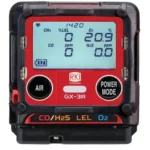
Overview
Underground mines, tunnels, and excavations operate under some of the most demanding gas monitoring requirements in any industry — and some of the most specific regulatory frameworks. In the United States, equipment used in underground mines under MSHA (Mine Safety and Health Administration) jurisdiction must carry MSHA approval before it can be legally deployed. That single requirement eliminates a large proportion of otherwise capable multi-gas detectors from consideration for mining applications, regardless of their technical performance. Finding a multi-gas monitor that is both MSHA-approved and genuinely practical for daily use in demanding underground environments has historically meant compromising on size, weight, or usability.
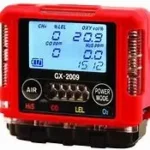
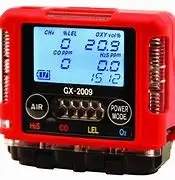
The Riken Keiki GX-2009 MultiGas Detector resolves that compromise. RKI Instruments — the North American division of Riken Keiki, a Japanese instrumentation manufacturer with over 70 years of gas detection heritage — describes the GX-2009 as the smallest and lightest 4-gas monitor with MSHA approval available. At 4.6 ounces (approximately 130 grams) and 2.7″ × 3″ × 1″ in dimension, it simultaneously monitors combustible gas (LEL), oxygen (O2), hydrogen sulphide (H2S), and carbon monoxide (CO) — the four parameters required for standard confined space and mining atmospheric monitoring — in a device small enough to be worn comfortably throughout a full underground shift.
What sets the GX-2009 apart in the multi-gas detector category is not size alone — it is size combined with MSHA approval combined with IECEx, ATEX, and CSA intrinsic safety certification covering multiple regulatory jurisdictions simultaneously. For operations that span MSHA-regulated underground workings in the US alongside internationally certified hazardous area environments, the GX-2009’s multi-jurisdiction certification profile means a single device specification is valid across those different regulatory frameworks — a practical advantage that reduces procurement complexity for global or multi-regulation operations.
Key Features
MSHA Approval — Underground Mining Compliance
The GX-2009 carries MSHA (Mine Safety and Health Administration) approval, authorising its use in underground mines, tunnels, and excavations under MSHA jurisdiction in the United States. MSHA approval is a mandatory regulatory requirement for gas detection equipment used in these environments — not a voluntary certification — and it involves independent testing and evaluation by MSHA before approval is granted. For safety managers and procurement teams specifying gas monitors for MSHA-regulated operations, this approval is the non-negotiable baseline that determines whether a device can be legally used at the worksite.
Simultaneous 4-Gas Monitoring — LEL, O2, H2S, CO
The GX-2009 monitors four gases simultaneously and continuously: combustible gas (methane as standard, 0–100% LEL), oxygen (0–40.0% Vol), hydrogen sulphide (0–100 ppm), and carbon monoxide (0–500 ppm). All four readings are displayed simultaneously on the backlit digital LCD — the worker sees the complete atmospheric picture at a glance, not a scrolling single-channel display. This four-parameter combination covers the standard atmospheric monitoring requirements for confined space entry, underground mining, tunnel construction, and general industrial hazardous area work in a single instrument.
Smallest and Lightest MSHA-Approved 4-Gas Monitor
At 2.7″ × 3″ × 1″ and 4.6 ounces (approximately 130 grams), the GX-2009 is the smallest and lightest 4-gas monitor with MSHA approval available according to RKI. For workers in underground environments — where equipment must be worn throughout a full shift in physically confined, often hot conditions — device weight and bulk are not trivial concerns. A multi-gas monitor that workers are willing to wear consistently because it doesn’t impede their work is a more effective safety tool than a heavier, bulkier device that gets left behind or worn incorrectly because it’s uncomfortable.
20-Hour Continuous Operation (3-Hour Full Charge)
The GX-2009 operates for up to 20 hours on a full 3-hour charge from its direct-charging NiMH battery set — and for 14 hours after a 90-minute charge. For underground mining shifts that can run 10 to 12 hours or longer, 20-hour battery life provides a meaningful operational margin beyond a standard shift duration. The 90-minute partial charge to 14-hour runtime also supports a rapid top-up charge between consecutive shifts where a full charge cycle is not available.
Multiple Alarm Types Including TWA and STEL
The GX-2009 implements multiple alarm types: two-level increasing alarms for gas concentration thresholds, overscale alarm, O2 decreasing and increasing alarms, TWA (Time-Weighted Average) alarm, STEL (Short-Term Exposure Limit) alarm, and a trouble alarm covering sensor disconnection, low battery, circuit error, and calibration range error. TWA and STEL alarm capability for toxic gases — H2S and CO — means the device tracks cumulative occupational exposure against the regulatory limits that define safe working conditions across a shift and within any 15-minute window. This is the alarm functionality that aligns gas monitoring with occupational health compliance rather than just immediate hazard response.
Multiple Sensor Configurations — From Single Gas to 4-Gas
The GX-2009 is available in multiple sensor configurations beyond the standard 4-gas (LEL / O2 / H2S / CO) setup: 3-gas configurations covering LEL/O2/CO, LEL/O2/H2S, and O2/H2S/CO; 2-gas configurations including LEL/O2, O2/H2S, CO/H2S, and O2/CO; and single gas configurations for LEL, CO, or H2S+br (bromine-compensated H2S). This configuration range means the GX-2009 housing and platform can be matched to the specific gas hazard profile of each application without over-specifying sensors that are not relevant to the monitoring requirement.
Diffusion Sampling with Optional Pump
Standard operation uses diffusion sampling — continuous passive monitoring of the atmosphere surrounding the worker — which is the appropriate mode for personal protective monitoring during active work tasks. An optional hand aspirator or motorised pump extends the device’s capability to remote sampling for confined space pre-entry checks and pipeline surveys, where the worker needs to assess atmospheric conditions at a remote point before entering. The sampling method flexibility means the GX-2009 functions as both a personal diffusion monitor and a remote-sampling survey instrument depending on the accessory configuration.
Splash-Resistant Housing with Backlit LCD
The GX-2009 operates across a temperature range of -4°F to 122°F (-20°C to +50°C) and 0–95% RH (non-condensing), with splash resistance confirmed in the specifications. The backlit digital LCD displays all four gas readings simultaneously, remaining readable in the low-light conditions common in underground mining and tunnel environments without requiring the worker to carry a separate light source to read the display.
Technical Specifications
Model: Riken Keiki GX-2009
Gases Monitored: LEL (combustible), O2, H2S, CO (standard 4-gas configuration)
Detection Ranges: LEL: 0–100% LEL (1% LEL increments) | O2: 0–40.0% Vol (0.1% Vol) | H2S: 0–100 ppm (0.5 ppm) | CO: 0–500 ppm (1 ppm)
Sensor Accuracy: LEL: ±5% of reading or ±2% LEL | O2: ±0.5% | H2S: ±5% of reading or ±2 ppm | CO: ±5% of reading or ±5 ppm
Display: Digital LCD, simultaneous 4-gas display with auto backlight
Dimensions: 2.7″H × 3″W × 1″D (approx. 70H × 75W × 25D mm)
Weight: 4.6 oz (approx. 130g)
Battery Life: 20 hours (3-hour full charge) / 14 hours (90-minute charge); NiMH direct charging, set of 2
Sampling Method: Diffusion (standard); hand aspirator or motorised pump (optional)
Response Time: Within 30 seconds (T90)
Operating Temperature: -4°F to 122°F (-20°C to +50°C)
Humidity: 0–95% RH, non-condensing (splash resistant)
Alarm Types: 2-increasing gas alarms, overscale, O2 decreasing/increasing, TWA, STEL, trouble alarm (sensor disconnection, low battery, circuit error, calibration range error)
Safety Approvals: IECEx Zone 0 Ex ia IIC T4; ATEX II 1G Ex ia IIC T4; optional MSHA version also available; CSA us classified, intrinsically safe, Class 1 Division 1, Groups A, B, C, D
Wireless Connectivity: Not specified
Data Logging: Not specified on listing — confirm with supplier
Warranty: Two years, material and workmanship
Benefits
For underground mine workers and tunnel construction personnel, the GX-2009’s combination of MSHA approval and 130-gram weight resolves a practical problem that heavier compliant alternatives create: equipment that meets regulatory requirements but that workers find too cumbersome to wear consistently throughout a shift. A device that workers actually wear, correctly positioned at breathing zone height, throughout an entire shift provides meaningfully better personal protection than a heavier compliant device that gets clipped to a bag or left at the entrance. The GX-2009’s size makes consistent compliance a realistic daily behaviour, not an aspiration.
For HSE managers and safety programme owners, the TWA and STEL alarm functionality transforms the GX-2009 from an immediate hazard alert device into a cumulative occupational exposure management tool. Workers in environments with chronic low-level H2S or CO exposure — mining, wastewater, petrochemical — need monitoring that tracks their running exposure against the daily and short-term limits that define legal compliance, not just peak concentration alarms that only fire in acute events. The GX-2009 tracks both simultaneously.
For procurement teams sourcing gas monitors for operations spanning multiple regulatory jurisdictions — US mining (MSHA), European hazardous areas (ATEX/IECEx), and North American non-mining hazardous locations (CSA Class 1 Division 1) — the GX-2009’s multi-jurisdiction certification profile reduces the number of device variants that need to be stocked, qualified, and maintained. One device specification covering MSHA, ATEX, IECEx, and CSA significantly simplifies global fleet management for multi-national operations.
Who It’s For
Underground Mine Safety Officer — MSHA-Regulated Operations
You’re responsible for ensuring every underground worker carries a functioning, approved gas monitor throughout their shift. MSHA approval is not optional — it’s the legal baseline for the equipment you can deploy. You need a 4-gas monitor that meets that requirement and that workers will actually wear comfortably through a 10-hour underground shift in heat and confined conditions. The GX-2009’s MSHA approval and 130-gram form factor directly address both the regulatory and the practical wearability requirements of your programme.
Confined Space Entry Supervisor — Multi-Industry Field Operations
You manage confined space entry across varied sites — utilities, construction, industrial maintenance — where atmospheric monitoring requirements consistently demand LEL, O2, H2S, and CO coverage simultaneously. You need a 4-gas instrument that is small enough to be practical for workers in confined spaces, certified for hazardous area use, and reliable enough that you trust it with the entry decision. The GX-2009’s ATEX/IECEx certification, simultaneous 4-gas display, and 20-hour battery cover the full operational span of your work programme without requiring mid-shift battery changes.
HSE Manager — Oil and Gas, Petrochemical, or Utilities Sector
Your workers operate across environments where H2S, CO, combustible gas, and oxygen deficiency are all credible daily hazards, and where occupational exposure management — not just alarm response — is a documented programme requirement. You need 4-gas monitors with TWA and STEL tracking for toxic gases, certifications that cover your site’s hazardous area classifications, and a two-year warranty from a manufacturer with a long track record in industrial gas detection. The GX-2009’s Riken Keiki heritage, multi-jurisdiction certification, and occupational exposure alarm functions address all three requirements.
Possible Applications
Underground Mining — MSHA-Regulated Environments — The GX-2009’s MSHA approval makes it the appropriate personal 4-gas monitor for underground coal and hard rock mines, tunnels, and excavations under MSHA jurisdiction. Workers in headings, shafts, and confined underground workings require continuous monitoring of LEL, O2, H2S, and CO throughout their shift.
Tunnel Construction and Underground Civil Works — Tunnel boring machine operators, underground construction workers, and inspection teams in road, rail, and utility tunnels face combustible gas, CO, and oxygen deficiency risks from diesel plant, ground gases, and blasting operations. The GX-2009’s compact size is practical for workers in confined tunnelling environments.
Confined Space Entry — Utilities, Water, and Wastewater — Water treatment operators, sewer maintenance teams, and utility engineers entering confined spaces require 4-gas monitoring covering the standard atmospheric parameters. The GX-2009’s simultaneous 4-gas display supports pre-entry and during-work atmospheric monitoring in a device compact enough for active field use.
Oil and Gas Upstream Operations — Field and Wellsite Work — Upstream field workers, wellhead operators, and pipeline inspection teams face H2S and combustible gas hazards in remote outdoor environments. The GX-2009’s 20-hour battery life, -20°C lower temperature rating, and ATEX/IECEx certification make it appropriate for remote field deployment in varied climatic conditions.
Petrochemical and Refinery Maintenance — Maintenance engineers and contractors on petrochemical sites require certified 4-gas personal monitoring during planned maintenance tasks, confined space entry, and hot work permit operations. The GX-2009’s ATEX II 1G Ex ia IIC T4 certification covers Zone 0 hazardous areas — the highest gas hazard zone classification.
Fire Services — HAZMAT and Post-Incident Atmospheric Assessment — Fire investigation teams and HAZMAT responders require 4-gas multi-parameter detection for post-incident atmospheric assessment in structures, vehicles, and chemical incident scenes. The GX-2009’s compact size and multi-parameter capability support rapid atmospheric evaluation in time-sensitive incident scenarios.
Construction — Enclosed and Below-Grade Work — Ground workers in below-grade construction, basement excavations, and enclosed building structures face CO from diesel plant, methane from ground gases, and oxygen deficiency risks. Personal 4-gas monitoring for these workers provides individual-level atmospheric protection beyond fixed detection system coverage.
Trust & Certifications
MSHA Approval — Federal Mining Safety Compliance
MSHA (Mine Safety and Health Administration) approval is a mandatory federal requirement for gas detection equipment used in underground mines and tunnelling operations under MSHA jurisdiction in the United States. Unlike voluntary certifications, MSHA approval requires independent evaluation and testing by the agency before the equipment can be legally used at an MSHA-regulated worksite. For procurement teams specifying monitors for US underground mining operations, MSHA approval is the regulatory gate that determines device eligibility before any other specification is evaluated.
IECEx Zone 0 Ex ia IIC T4 — Highest International Hazardous Area Classification
IECEx Zone 0 Ex ia IIC T4 is the highest available classification in the international hazardous area certification system. Zone 0 covers environments where explosive atmospheres are present continuously or for long periods — more demanding than Zone 1 (present during normal operation) or Zone 2 (present only under abnormal conditions). Ex ia (intrinsic safety, category ia) is the protection concept that restricts energy levels in the circuit to below ignition thresholds even under two concurrent fault conditions. IIC gas group covers hydrogen and acetylene — the gases with the lowest minimum ignition energy. For procurement on sites requiring the most stringent hazardous area certification, Zone 0 IIC T4 provides the broadest and highest-level coverage available.
ATEX II 1G Ex ia IIC T4 — European Zone 0 Certification
The ATEX equivalent of the IECEx classification confirms the GX-2009 meets European hazardous area requirements for Zone 0 gas environments, Group IIC, temperature class T4. Equipment Group II 1G (Category 1 Gas) is required for Zone 0 installations. For operations on European petrochemical, chemical, and offshore sites where ATEX certification is a mandatory procurement requirement, ATEX II 1G Ex ia IIC T4 is the certification that confirms Zone 0 IIC compliance.
CSA — Class 1 Division 1, Groups A, B, C, D
CSA (Canadian Standards Association) certification to Class 1 Division 1, Groups A, B, C, D covers North American hazardous locations classified under the NEC/CEC Division system. Division 1 is the North American equivalent of Zone 1 in the IECEx/ATEX zone system. Groups A, B, C, and D together cover acetylene, hydrogen, ethylene, and propane/methane — effectively the full range of industrial flammable gases. For US and Canadian facilities using the NEC/CEC hazardous location classification system, CSA Class 1 Division 1 Groups A, B, C, D confirms broad hazardous location coverage under North American electrical codes.
Riken Keiki — 70+ Years of Gas Detection Heritage
Riken Keiki is a Japanese manufacturer of gas detection equipment founded in 1951, with over 70 years of experience developing sensors and instruments for industrial gas monitoring. RKI Instruments is the North American arm of Riken Keiki, and the GX-2009 is built on the same proprietary sensor technology platform used across the wider RKI product range. The manufacturer’s sensor quality control and institutional knowledge in electrochemical and catalytic sensor development underpin the performance and longevity specifications that the GX-2009 carries.
Two-Year Warranty — Material and Workmanship
The GX-2009 is backed by a two-year warranty covering materials and workmanship — a standard warranty commitment from RKI that reflects confidence in the instrument’s build quality and sensor performance over its initial operational lifecycle.
Accessories & Variants
Battery Charger (included as required accessory)
The direct-charging NiMH battery set requires a compatible charger. The charger is listed as a required accessory — confirm charger type and regional power compatibility with the supplier at procurement stage for international deployments.
Hand Aspirator (optional sampling accessory)
A hand-operated aspirator pump for manual sample drawing from remote or inaccessible areas. Extends the GX-2009’s diffusion-only capability to remote sampling for confined space pre-entry checks without requiring a powered pump unit. Useful for quick pre-entry atmospheric checks without full motorised pump setup.
Motorised Pump (optional sampling accessory)
A motorised pump for active, continuous remote sampling from confined spaces, pipelines, and inaccessible locations. Converts the GX-2009 from a diffusion personal monitor to a remote-sampling survey instrument for pre-entry confined space assessment and pipeline leak surveys.
Available Configurations
4-Gas Standard: LEL / O2 / H2S / CO
3-Gas Options: LEL / O2 / CO | LEL / O2 / H2S | O2 / H2S / CO
2-Gas Options: LEL / O2 | O2 / H2S | CO / H2S | O2 / CO
Single Gas: LEL | CO | H2S+br (bromine-compensated)
The MSHA-approved version of the GX-2009 is available as a specific variant — confirm at order stage whether MSHA approval is required for your deployment environment, as this version carries the MSHA designation alongside the standard IECEx/ATEX/CSA certifications.
Request a Quote or Technical Consultation
If you’re specifying 4-gas portable monitors for MSHA-regulated underground operations, for multi-jurisdiction hazardous area environments spanning IECEx, ATEX, and CSA requirements, or for confined space programmes where TWA and STEL occupational exposure tracking is a compliance requirement alongside immediate gas alarms, the Riken Keiki GX-2009 is worth a detailed evaluation against your operational and regulatory requirements.
Speak with our safety equipment team to confirm the correct configuration for your specific gas hazard profile, clarify MSHA vs standard certification requirements for your deployment, or request pricing for individual units or fleet quantities. We work directly with HSE managers, mine safety officers, confined space programme coordinators, and procurement leads — and can advise on sampling accessory selection, calibration gas supply, and configuration options as part of the consultation process.