Cart (
Overview
Every liferaft installation on a SOLAS vessel carries a single mechanical responsibility: to release the liferaft automatically if the vessel sinks before the crew can do it manually. The hydrostatic release unit is the component that fulfils that responsibility. It is not a backup system — it is often the only path to liferaft deployment in a rapid sinking or capsize scenario where crew are incapacitated or have no time to reach the liferaft cradle. An HRU that is past its service date, mechanically compromised by corrosion, or incorrectly fitted is not a safety system — it is a false assurance that will fail when it matters most.
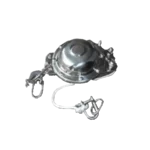
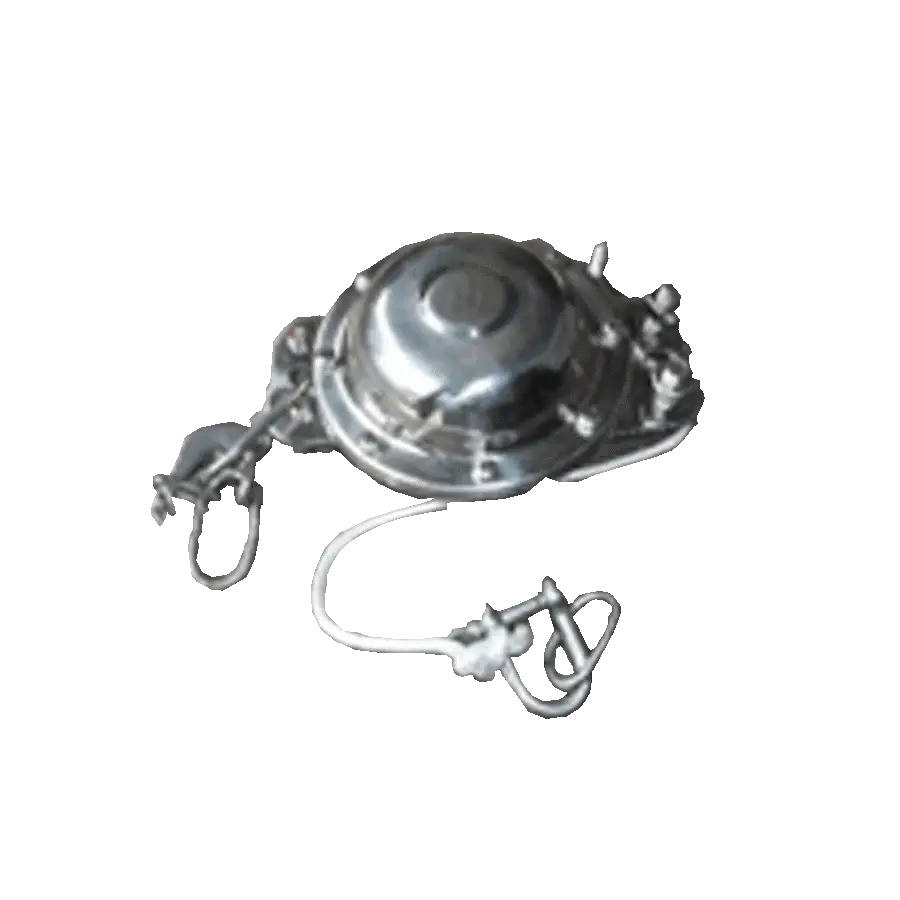
The Hydrostatic Release Unit (Serviceable Type) is a stainless steel, annually serviceable liferaft HRU that operates automatically within a depth of 2–4 metres, releasing the liferaft lashing and allowing the liferaft container to float free and inflate. Unlike disposable HRUs that are replaced as a complete unit at the end of their service life, the serviceable type is designed to be inspected, overhauled, and re-approved by a certified service station at each annual liferaft service — returning a mechanically verified, compliant unit to the cradle rather than a replacement factory unit. It is supplied with complete fittings, ready for installation into the liferaft cradle mounting system.
What distinguishes the serviceable type HRU from disposable alternatives is the stainless steel construction and the annual service model it supports. Stainless steel provides the mechanical robustness and corrosion resistance required for a component that will be physically inspected, disassembled, and reassembled by service technicians at each annual service cycle — a material that holds tolerances, resists thread damage, and presents no galvanic corrosion concerns when handled in the marine service environment. For vessel operators who run their liferaft compliance through approved SOLAS liferaft service stations, the serviceable HRU integrates naturally into the annual liferaft inspection and repackaging programme — the HRU is serviced when the liferaft is serviced, on the same schedule, by the same approved station.
Key Features
Automatic Hydrostatic Activation at 2–4 Metres Depth — No Crew Action Required
The HRU activates automatically when submerged to a depth of 2–4 metres, with water pressure acting on the internal mechanism triggering the release of the liferaft lashing. The activation is entirely passive — no electrical power, no crew intervention, and no manual release action is required. In a scenario where the vessel is sinking rapidly, the crew are in the water, or the bridge has been abandoned without the liferaft being manually released, the hydrostatic mechanism ensures the liferaft reaches the surface regardless of crew availability. The 2–4 metre activation depth window is the IMO-specified range for liferaft HRU devices — deep enough to prevent accidental activation from wave action and surface flooding, shallow enough to release the liferaft well before it would be dragged to a depth where water pressure prevents inflation.
Stainless Steel Construction — Durable, Serviceable, Corrosion-Resistant
The HRU body and primary mechanical components are stainless steel — a material chosen for the combination of corrosion resistance, mechanical strength, and serviceability that the annual inspection and overhaul cycle requires. Unlike glass fibre reinforced nylon or cast aluminium alternatives, stainless steel can be physically inspected for mechanical wear, thread condition, and surface integrity at each service; threads can be cleaned and re-cut if necessary; and the material’s dimensional stability ensures that a serviced unit holds its calibrated activation characteristics across the service period. For service technicians performing annual HRU inspection and overhaul, stainless steel is the material that allows a thorough, confidence-giving inspection — one where the technician can verify the mechanism’s condition, not simply confirm the unit has not been physically damaged.
Complete Fittings Included — Ready for Cradle Installation
The HRU is supplied with complete fittings — the shackles, weak links, rope slings, and connection hardware needed to install the unit into a standard liferaft cradle mounting system. Receiving an HRU with incomplete or missing fittings is a common problem with lower-cost alternatives sourced through non-specialist channels, and missing hardware discovered at the point of installation — or, worse, at a service inspection — creates compliance gaps and delays. The complete fittings supply ensures the unit is installation-ready on arrival, and that the full mechanical system — HRU body, weak link, rope sling, and connection hardware — is present, matched, and compliant as a set.
Annual Service Model — Integrates with Liferaft Compliance Programme
The serviceable type HRU is designed to be inspected and overhauled at each annual liferaft service by an approved SOLAS liferaft service station. At each service, the technician disassembles the HRU, inspects the internal mechanism for wear and corrosion, replaces worn or damaged components, verifies the activation characteristics, and reassembles and re-approves the unit for a further service period. The annual service model integrates directly into the vessel’s existing liferaft annual inspection and repackaging programme — the HRU service is performed at the same time as the liferaft service, at the same approved station, with service documentation recorded on the same liferaft service certificate. For vessel operators whose compliance programme is already built around an approved liferaft service station relationship, the serviceable HRU is the natural specification choice.
IMO-Compliant Activation Depth Range — Verified Float-Free Performance
The 2–4 metre activation depth range corresponds directly to the performance specification set out in the IMO Life Saving Appliance (LSA) Code for hydrostatic release units used in float-free liferaft stowage arrangements. Compliance with the LSA Code activation depth specification is the fundamental performance requirement that flag state surveyors and port state control officers verify when checking HRU compliance during vessel inspections. An HRU with a documented, approved activation depth range within the 1.5–4.0 metre LSA Code window — and, specifically, within the 2–4 metre range of this unit — satisfies the performance verification requirement that underpins SOLAS float-free liferaft compliance.
Technical Specifications
Product Type: Hydrostatic Release Unit — Serviceable Type (for Liferaft)
Body Material: Stainless Steel
Activation Depth: 2 – 4 metres (automatic, hydrostatic)
Activation Method: Automatic — water pressure actuated, no crew action required
Service Type: Serviceable — annual inspection and overhaul by approved service station
Supplied With: Complete fittings (shackles, weak link, rope sling, connection hardware)
Service Interval: Annual — aligned with liferaft annual inspection programme
Construction: Stainless steel body with mechanical internal activation mechanism
Regulatory Compliance: SOLAS / IMO LSA Code — confirm specific flag state approval with supplier
Installation: Float-free liferaft cradle mounting — complete fittings included
Benefits
The core benefit of the serviceable type HRU is the annual mechanical verification it provides. Where a disposable HRU is replaced as a sealed unit with an assumed internal condition, the serviceable HRU is physically inspected, disassembled, and overhauled by a trained technician at each service — with any worn or marginal components replaced before the unit is returned to service. For vessel operators and safety officers who place a high value on knowing, rather than assuming, the mechanical condition of their life safety equipment, the annual service inspection provides that assurance in a way that a factory-sealed replacement unit cannot.
The stainless steel construction provides long-term mechanical durability across multiple service cycles. A well-maintained stainless steel HRU, serviced annually by a competent technician, has a service life measured in multiple years across several service cycles — compared to the two-year single-use service life of a disposable unit. Over a ten-year vessel operational period, the total cost of serviceable HRU ownership — purchase price plus annual service cost across all cycles — may be competitive with the accumulated replacement cost of disposable units replaced every two years, depending on service station costs and the number of liferaft installations on the vessel.
The complete fittings supply eliminates the procurement gap risk at installation or service time. Receiving a complete, matched set of HRU body and associated hardware — not just the HRU mechanism without the weak link or rope sling — ensures the installation can proceed immediately and that the complete mechanical system is correctly specified and matched from the outset.
Integration with the annual liferaft service programme simplifies compliance scheduling. Rather than managing a separate HRU replacement schedule alongside the annual liferaft inspection, the serviceable HRU compliance task is embedded within the existing liferaft service programme — one visit to the approved service station, one service certificate, one compliance event covering both the liferaft and the HRU.
Who It’s For
Approved SOLAS Liferaft Service Stations
A SOLAS-approved liferaft service station performing annual liferaft inspections and repackaging for commercial vessels needs to stock serviceable HRU products that they can inspect, overhaul, and re-approve as part of the liferaft service process. The serviceable type HRU — with its stainless steel construction designed for inspection and overhaul, and its annual service model — is the product category that the service station works with in their normal service programme. Stocking a serviceable HRU that is compatible with the full range of liferaft models they service, and that can be reliably overhauled and re-documented at each annual service visit, is the service station’s primary procurement requirement for this product category.
Ship Managers with Established Liferaft Service Station Relationships
A ship manager whose fleet liferaft compliance is managed through a single approved SOLAS liferaft service station — with annual service calls coordinated at planned port calls — already has a compliance programme structured around the annual service cycle. Specifying a serviceable HRU for the fleet’s liferaft installations means the HRU compliance task is absorbed into the existing annual service programme, with no separate HRU replacement schedule to manage independently. The stainless steel construction supports a multi-cycle service life that reduces the frequency of complete HRU replacement purchases compared to two-yearly disposable unit replacement, reducing the procurement events and associated administrative overhead across a large fleet.
Vessel Masters and Safety Officers on Long-Trading Vessels
A vessel master on a long-trading cargo vessel — operating on international routes with planned annual drydock or special survey port calls — manages safety equipment compliance around the vessel’s scheduled maintenance programme. The annual service model of the serviceable HRU aligns with this maintenance scheduling approach: the HRU is serviced at the same port call as the annual liferaft service, as part of the annual safety equipment verification programme that coincides with the vessel’s planned maintenance schedule. For vessels where safety equipment compliance is managed through a structured planned maintenance system (PMS), the serviceable HRU’s annual service requirement is a straightforward PMS task entry.
Possible Applications
General Cargo Vessels — Float-Free Liferaft Compliance
General cargo vessels on international voyages carry liferaft installations in float-free cradle mountings as a SOLAS Chapter III requirement. The serviceable stainless steel HRU is appropriate for vessels whose safety equipment compliance programme is managed through an approved SOLAS liferaft service station relationship — the standard compliance model for most commercially managed cargo vessels trading internationally.
Bulk Carriers and Ore Carriers
Bulk carriers — among the vessel types with the highest historical rate of sudden loss from structural failure and flooding — carry liferaft installations where the automatic float-free function of the HRU is particularly critical. The stainless steel construction of the serviceable HRU is appropriate for bulk carrier service environments, where the liferaft cradle may be exposed to hold dust, water ingress, and the mechanical loading of a working vessel’s normal operation between annual service visits.
Tankers — Crude, Product, and Chemical
Tanker vessels carry liferaft installations subject to SOLAS requirements and the additional scrutiny of oil major vetting inspections. The annual service documentation produced by an approved service station for a serviceable HRU provides the maintenance record evidence that vetting inspectors and terminal safety auditors look for when reviewing the vessel’s safety equipment maintenance history.
Offshore Platform Supply and Support Vessels
Offshore support vessels operating in the North Sea, Gulf of Mexico, and other offshore production regions carry liferaft installations subject to flag state SOLAS requirements and offshore operator safety management system audits. The mechanically verified annual service record of a serviceable HRU — documented by an approved service station — supports the vessel’s safety management system audit trail for life saving appliance maintenance.
Passenger and Ro-Ro Vessels
Passenger vessels and ro-ro ferries carry large numbers of liferaft installations, each with an associated HRU. Where the vessel’s liferaft service programme is managed through an approved service station on an annual schedule, the serviceable HRU integrates into that programme across the full liferaft inventory — with each HRU inspected and re-documented at the annual service visit.
Fishing Vessels on Extended Offshore Operations
Larger fishing vessels on extended offshore operations that are managed through a planned maintenance programme and annual safety survey schedule benefit from the serviceable HRU’s annual service model — the HRU is serviced at the annual safety survey, alongside the liferaft and other life saving appliances, with the service station producing the documentation required by the flag state surveyor.
Naval Auxiliary and Government Research Vessels
Government-operated vessels — naval auxiliaries, coast guard vessels, fishery protection vessels, and oceanographic research ships — typically maintain safety equipment to SOLAS-equivalent standards with annual service documentation. The stainless steel serviceable HRU’s durability across multiple service cycles and its annual service model align with the planned maintenance approaches used on government vessel fleets.
Trust & Certifications
SOLAS Chapter III — Float-Free Liferaft Stowage and HRU Requirement
SOLAS Chapter III requires liferafts on SOLAS vessels to be stowed in float-free arrangements with operational hydrostatic release units. The HRU must be approved by the flag state administration or a recognised organisation, and must be maintained in serviceable condition — for a serviceable type HRU, this means annual inspection and overhaul at an approved SOLAS service station. An HRU that has not been serviced within the required interval, or whose service documentation cannot be produced for a port state control inspection, will result in a deficiency and potential vessel detention. Confirm the specific flag state approval documentation for this HRU with the supplier before procurement.
IMO LSA Code — HRU Performance Requirements
The IMO Life Saving Appliance Code specifies the performance requirements for hydrostatic release units, including the activation depth range (1.5–4.0 metres), the mechanical release force requirements, and the environmental resistance requirements covering temperature cycling and corrosion exposure. The 2–4 metre activation depth of this HRU falls within the LSA Code specified range, confirming it meets the fundamental performance criterion for a SOLAS-compliant liferaft HRU. The stainless steel construction addresses the corrosion resistance requirements for a unit exposed to the marine environment between service intervals.
IMO Resolution A.689(17) — Testing and Approval Standard
IMO Resolution A.689(17) establishes the testing procedures for hydrostatic release devices used in life saving appliances, covering activation depth testing, mechanical load testing, temperature cycle testing, and corrosion resistance assessment. HRU products approved under A.689(17) have been subjected to defined type approval tests that verify the product performs to the LSA Code specification. Confirm that the specific HRU carries valid type approval documentation under A.689(17) or the applicable current IMO resolution for your vessel’s flag state requirements.
Stainless Steel — Marine-Grade Corrosion Resistance Standard
Stainless steel is the recognised material standard for serviceable marine safety equipment components subject to salt water exposure, humidity, and the physical demands of annual inspection and overhaul. The material’s resistance to rust, pitting, and galvanic corrosion in marine environments ensures that the HRU body maintains its structural and mechanical integrity across multiple service cycles — a material property that directly supports the serviceability model of this HRU type. Marine-grade stainless steel (typically 316L for maximum salt water corrosion resistance) is the specification to confirm with the supplier for installations in high-salinity or tropical trading environments.
Accessories & Variants
Replacement Weak Links and Rope Slings
At each annual service, the weak link and rope sling components are typically replaced as part of the overhaul — these are the components most subject to fatigue and UV degradation across a service period. Replacement weak links and rope slings should be sourced from the HRU manufacturer or an approved marine safety equipment supplier to ensure they meet the correct breaking strength specifications. Substituting non-approved or non-specification components for the original fittings at service compromises the HRU’s calibrated release characteristics and may void its type approval.
Liferaft Cradles and Float-Free Mounting Hardware
The HRU operates as part of a complete float-free liferaft mounting system — the cradle, lashing strap, HRU, and painter line all interact as a system in the float-free release sequence. At each annual service, the cradle mounting hardware and lashing strap should be inspected alongside the HRU — and replaced if any component shows corrosion, UV degradation, or mechanical wear that would compromise the float-free release function. Source cradle hardware from the liferaft manufacturer or an approved SOLAS equipment supplier to confirm compatibility.
Disposable Type HRU — Alternative for No-Service Installations
Where a vessel operator’s compliance model does not include an established approved liferaft service station relationship, or where the operational pattern makes annual shore-side service coordination impractical, the disposable type HRU — replaced as a complete unit every two years without annual service — may be the more practical specification. Both types satisfy SOLAS float-free liferaft compliance requirements; the choice between them depends on the vessel’s compliance programme structure, trading pattern, and the operator’s preference for annual service versus periodic replacement. Contact the supplier to discuss which type best fits the vessel’s compliance management approach.
Available Configuration
Serviceable Type HRU — Stainless Steel Body, Complete Fittings, 2–4m Activation Depth — for float-free liferaft installations on SOLAS vessels, annual service by approved station required. Confirm flag state approval documentation and compatibility with the specific liferaft and cradle model at procurement stage.
Get in Touch
If you are procuring serviceable hydrostatic release units for liferaft installations on commercial vessels, offshore support vessels, or government-operated ships — or if you need to confirm flag state approval status, compatibility with your liferaft and cradle configuration, and annual service arrangements — contact us to discuss your requirement and request a formal procurement quotation.
Our team can assist with HRU selection, flag state approval confirmation, fleet supply arrangements, and compliance documentation support for port state control and flag state survey inspections.
📍 3791 Jalan Bukit Merah #06-01, E-Centre @ Redhill, Singapore 159471