Cart (
Overview
Personal gas detection in demanding industrial environments comes down to one practical question: will the device still be working at the end of the shift? Not in a controlled test environment, but after a day of physical work in a dusty processing plant, a wet outdoor site, or a confined space where the monitor gets knocked, bumped, and exposed to everything the environment throws at it. Most personal gas monitors are tested under controlled conditions. The ones that earn long-term trust on industrial sites are the ones designed to survive uncontrolled ones.
The BH-90A Portable Single Gas Detector is built with that operational reality as its starting point. Featuring a Three-Defense Design that addresses water, dust, and impact resistance simultaneously, industrial-grade sensors with a two-year rated life, and a 1500mAh lithium battery that delivers a minimum of 8 hours of continuous operation, the BH-90A is specified for sustained daily field use rather than light-duty or occasional monitoring tasks.
Its Ex ib IIB T3 intrinsic safety certification makes the BH-90A appropriate for deployment in Zone 1 hazardous atmospheres — a requirement on petrochemical, chemical, and utility sites that eliminates many otherwise capable personal monitors from consideration at the procurement stage. For safety managers and HSE officers who need a single-gas device that meets both the durability and the certification requirements of industrial hazardous area environments, the BH-90A covers both without compromise.
Key Features
Three-Defense Design — Water, Dust, and Impact Resistance
The Three-Defense Design applied to the BH-90A housing provides simultaneous protection against moisture ingress, dust infiltration, and physical impact damage. In industrial environments — processing plants, outdoor sites, confined spaces, mining operations — a personal gas monitor faces all three of these stresses routinely, not as exceptional events. A device built to withstand each of them independently will fail where one stress combines with another; the Three-Defense approach addresses the combination as a design objective. At approximately 130 grams in a 109 × 60 × 30mm form factor, the BH-90A achieves this durability without the bulk that would make it impractical for all-day personal wear.
Industrial-Grade Sensors with Two-Year Rated Life
The BH-90A uses industrial-grade sensors — electrochemical for toxic and oxygen gas types, catalytic bead for combustible gas variants — selected for accuracy, stability, and longevity in real field operating conditions rather than laboratory environments. A two-year sensor life provides a documented and predictable replacement schedule, allowing HSE managers to build sensor maintenance into their safety programme calendar rather than responding reactively to sensor degradation. Industrial sensor quality also means consistent accuracy across the working temperature range of -10°C to 55°C, which covers the environmental conditions encountered across the full range of outdoor and industrial indoor deployments.
Triple-Mode Alarm System (Sound, Light, Vibration)
The BH-90A activates three alarm channels simultaneously when a gas threshold is crossed: audible alarm, LED visual alert, and physical vibration. The simultaneous triple-mode response is important in the environments where single-gas monitors are most needed — plant rooms with background noise, confined spaces where the worker may be focused on a physical task, and outdoor sites where wind or distance reduces the range of an audible-only alarm. The vibration alarm in particular provides a bodily alert that reaches the worker regardless of noise level or visual attention, which in a gas event can be the difference between a prompt evacuation and a delayed response.
8-Hour Continuous Working Time — Large Capacity Battery
The 1500mAh lithium battery at DC 3.7V delivers a minimum of 8 hours of continuous operation per charge, with a charging time of 4 to 6 hours. For shift-based industrial operations, 8-hour battery life means the device covers a standard working day without a mid-shift interruption. The “large capacity battery” specification referenced in the product listing reflects a deliberate decision to prioritise operational duration over compact battery size — the right trade-off for a device intended for all-day personal wear in field environments where stopping to charge mid-shift is not practical.
ppm and mg/m³ Unit Switching
The BH-90A supports switching between ppm and mg/m³ concentration display units. Different regulatory frameworks and workplace exposure limit standards express gas concentrations in different units — UK WELs, OSHA PELs, and ACGIH TLVs all use ppm or mg/m³ depending on the gas type and the specific standard being applied. Being able to display readings in the unit that matches the applicable regulatory standard removes the need for manual conversion calculations and reduces the risk of compliance errors when comparing detector readings against published exposure limits.
1.77-Inch LCD Display with Temperature Readout
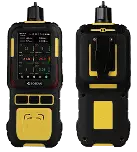
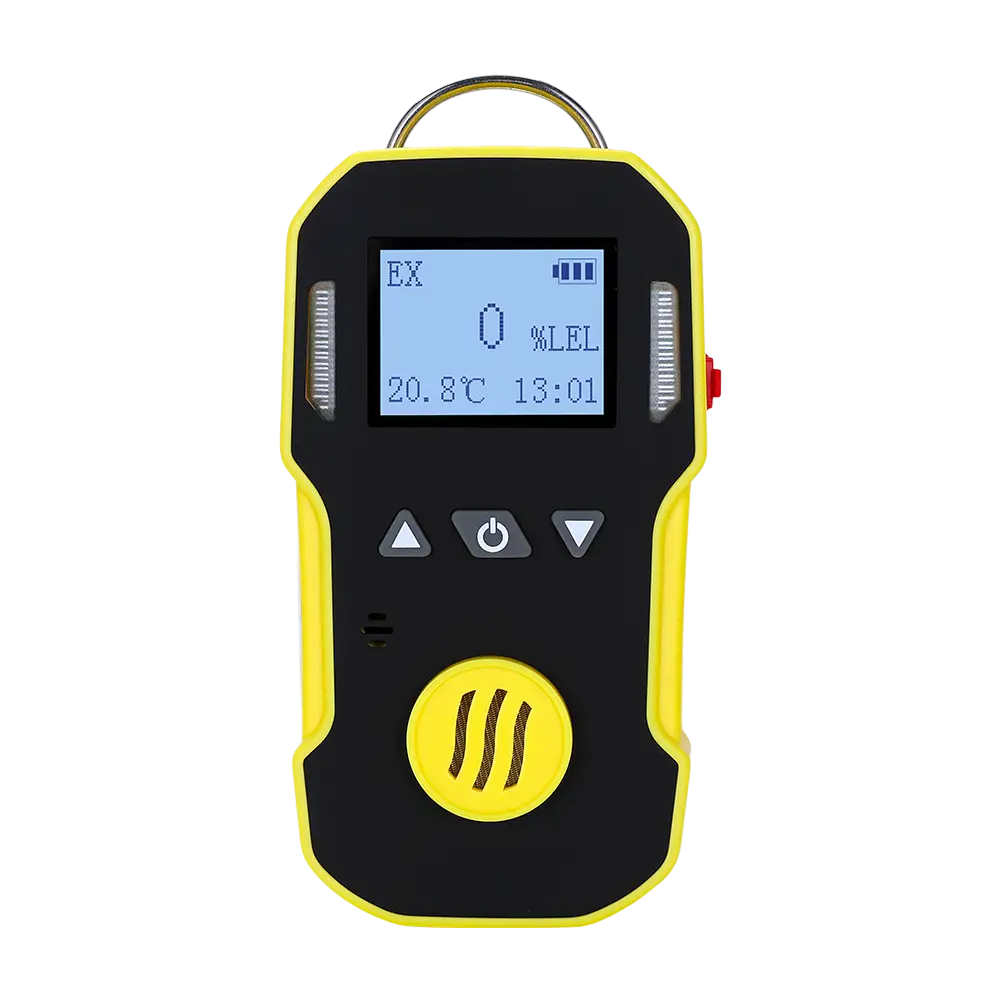
The BH-90A features a 1.77-inch LCD screen that displays the real-time gas concentration reading alongside a temperature readout — visible in the product image showing 20.8°C alongside the gas reading. The temperature display is a practical addition for workers in environments where ambient temperature is a relevant safety consideration — confined spaces, outdoor winter operations, or high-temperature plant areas. The display provides all the information the worker needs to assess their immediate environment without requiring them to carry a separate thermometer.
Natural Diffusion Sampling
The BH-90A uses natural diffusion sampling — the sensor is directly exposed to the ambient atmosphere at the detection face, without a pump drawing samples from a remote point. Natural diffusion is the standard sampling method for personal clip-on gas monitors, providing continuous real-time monitoring of the atmosphere immediately surrounding the worker throughout their work task. For personal protective monitoring — as distinct from remote pre-entry atmospheric testing — diffusion sampling is the appropriate and most reliable method for ensuring the reading reflects the worker’s actual exposure.
Technical Specifications
Model: BH-90A
Display: 1.77 inch LCD (with temperature readout)
Dimensions: 109 × 60 × 30mm
Weight: Approximately 130g
Power Supply: 1500mAh Lithium Battery (DC 3.7V)
Charging Time: 4–6 hours
Working Time: ≥8 hours continuously
IP Rating: Three-Defense Design (water, dust, and impact resistant)
Alarm Types: Sound, Light (LED), Vibration — three simultaneous modes
Sampling Method: Natural diffusion
Response Time: T90 <60 seconds
Working Temperature: -10°C to 55°C
Humidity: ≤95% RH (no dew)
Sensor Life: 2 years (depending on usage environment)
Measurement Units: ppm / mg/m³ (switchable)
Safety Approvals: Ex ib IIB T3
Wireless Connectivity: Not specified
Data Logging: Not specified — confirm with supplier
Benefits
For workers wearing the BH-90A through an industrial shift, the most tangible benefit is a device they can stop thinking about. The Three-Defense housing handles the physical environment, the 8-hour battery handles the shift duration, and the triple-mode alarm handles the moments when the environment becomes dangerous. Workers in genuinely hazardous industrial environments don’t have the mental bandwidth to babysit their monitoring equipment alongside the technical demands of their actual job — a device that manages itself reliably in the background is what makes personal gas monitoring work in practice rather than just in theory.
For HSE managers and safety programme owners, the Ex ib IIB T3 intrinsic safety certification resolves a procurement gate that eliminates many personal monitors from consideration on hazardous area sites before any other specification is evaluated. Once that certification requirement is met, the BH-90A’s Two-year sensor life and Three-Defense build quality support a predictable, manageable maintenance programme — scheduled sensor replacements rather than reactive device failures, and a durable housing that reduces damage-related attrition in the fleet over a multi-year deployment.
For procurement teams evaluating industrial single gas detectors for hazardous area environments, the BH-90A’s combination of Ex ib IIB T3 certification, Three-Defense durability, and 8-hour battery life in a 130-gram device represents a practical specification that covers the requirements of most industrial personal monitoring applications without the cost premium associated with top-tier branded alternatives. The ppm/mg/m³ unit switching reduces ongoing administrative burden when managing compliance across regulatory frameworks that express exposure limits in different units.
Who It’s For
Process Plant Operator — Petrochemical or Chemical Facility
You work rotating shifts in a Zone 1 classified process area where intrinsic safety certification is a non-negotiable equipment requirement. Your shift runs 8 to 12 hours, and your personal gas monitor needs to last the full duration without a recharge. The BH-90A’s Ex ib IIB T3 certification clears the site access requirement, the 8-hour battery covers your shift, and the Three-Defense housing handles the daily physical realities of process plant work. The vibration alarm ensures you receive a gas warning even in the noisiest areas of the plant.
HSE Officer — Utilities, Water Treatment, or Industrial Facilities Management
You’re responsible for ensuring maintenance workers and contractors entering risk zones across your facility are carrying certified, calibrated personal gas monitors. You need a device that satisfies your site’s hazardous area requirements, that holds up across months of daily use without high failure rates, and that has a sensor replacement cycle you can plan for in advance. The BH-90A’s Ex ib certification, two-year sensor life, and industrial-grade construction give you a fleet device that meets those requirements without demanding continuous management attention.
Field Maintenance Contractor — Multi-Site Industrial Work
You work across multiple industrial sites — refineries, chemical plants, utility infrastructure — where site access requirements vary but Ex ib certified personal gas monitoring is a consistent baseline requirement. You need a robust, reliable single-gas monitor that travels well, holds up to the physical demands of maintenance work, and doesn’t require site-specific calibration or documentation beyond the standard bump test. The BH-90A’s compact size, durable housing, and recognised intrinsic safety classification make it appropriate across the range of sites you work on.
Possible Applications
Petrochemical and Refinery Plant Operations — Process operators, maintenance engineers, and contractors working in Zone 1 classified areas on petrochemical and refinery sites require Ex-certified personal gas monitoring for the duration of their time in at-risk zones. The BH-90A’s Ex ib IIB T3 certification meets this requirement across the most common gas group classifications in these environments.
Chemical Manufacturing — Process and Maintenance Areas — Workers in chemical production facilities face single-gas hazard exposure risks from specific process chemicals, reagents, and byproducts. The BH-90A’s configurable single-gas sensor specification allows the device to be targeted at the specific gas hazard relevant to each production area or maintenance task.
Wastewater Treatment and Pumping Infrastructure — H2S is the primary gas hazard in wastewater environments, with oxygen deficiency as a secondary risk in enclosed spaces. Maintenance operators and inspection teams working in pump stations, treatment plant enclosed areas, and sewer networks require continuous personal monitoring throughout their time in at-risk zones.
Oil and Gas Upstream Field Operations — Wellhead operators, flow assurance engineers, and pipeline inspection teams working at remote upstream locations require durable personal gas monitors capable of operating across the full ambient temperature range encountered in outdoor field environments. The BH-90A’s -10°C to 55°C working temperature range covers most outdoor operational conditions.
Mining and Surface Processing Operations — Workers in underground mines, surface processing plants, and ore handling facilities face gas hazards from geological sources, processing chemicals, and diesel plant. The BH-90A’s Three-Defense build is appropriate for the physically demanding and dust-intensive conditions of mining environments.
Power Generation — Boiler Houses and Plant Rooms — Maintenance engineers working in boiler houses, gas turbine enclosures, and enclosed plant rooms in power generation facilities require personal CO or combustible gas monitoring during inspection and servicing tasks. Compact, clip-on personal monitors that operate independently of fixed detection systems provide individual-level protection during these tasks.
Confined Space Entry — Industrial and Civil — The BH-90A provides continuous personal atmospheric monitoring for workers during confined space entry tasks across industrial plant, civil infrastructure, and utilities environments. Natural diffusion sampling ensures the reading reflects actual worker exposure throughout the duration of the work task.
Trust & Certifications
Ex ib IIB T3 — Intrinsic Safety Certification
The BH-90A carries an Ex ib IIB T3 intrinsic safety classification, confirming it is certified for use in Zone 1 hazardous areas where explosive atmospheres may be present during normal operation. The IIB gas group classification covers a wide range of common industrial gases including hydrogen sulphide, ethylene, town gas, and most light hydrocarbons — making this classification applicable across petrochemical, chemical, utility, and oil and gas environments. The T3 temperature class (maximum surface temperature 200°C) is appropriate for the majority of industrial gas hazard applications. For procurement teams on sites where Zone 1 intrinsic safety certification is a mandatory equipment requirement, Ex ib IIB T3 satisfies this requirement for the majority of common industrial gas monitoring applications.
Industrial-Grade Sensor Specification
Industrial-grade sensor selection means the detection components are validated for accuracy and stability across the BH-90A’s full operating range and the expected field conditions of industrial deployment — not just controlled laboratory conditions. A two-year rated sensor life provides a documented maintenance horizon that supports structured replacement scheduling and accurate total cost of ownership calculations across the procurement lifecycle.
T90 Response Time <60 Seconds
The T90 response time specification is a standardised gas detection performance metric indicating the time for the sensor to reach 90% of its final reading value. A T90 of under 60 seconds for a natural diffusion personal monitor represents the sensor’s ability to detect a change in gas concentration within a timeframe that provides the worker with meaningful warning time before exposure reaches higher levels — a performance standard relevant to the safety case for using the device in personal protection applications.
Three-Defense Design — Field Durability Standard
The Three-Defense Design classification reflects a construction standard addressing simultaneous resistance to water ingress, dust contamination, and physical impact damage. This is a design-level commitment to field durability that directly affects the device’s operational reliability and fleet attrition rate over a multi-year deployment — relevant to the total cost of ownership calculations that inform procurement decisions for industrial safety equipment.
Accessories & Variants
Charging Cable (compatible with BH-90A power input)
Charging accessories for the BH-90A should be sourced from the supplier or authorised accessories list to ensure compatibility with the device’s charging interface and intrinsic safety classification. Confirm charging accessory specification with the supplier at procurement stage for fleet deployments.
Carry Clip / Belt Attachment
Positions the BH-90A at breathing zone height during normal work activity for representative atmospheric readings throughout the shift. Compatible with standard work clothing, overalls, and safety harness systems typically used in industrial environments.
Calibration Gas (single gas, target-specific)
Certified single-gas calibration cylinders appropriate to the BH-90A’s sensor configuration for bump testing and full span calibration. Regular bump testing before confined space entry or hazardous area work is strongly recommended as best practice and is a requirement under many site permit-to-work procedures.
Available Variants
The BH-90A is available in single-gas configurations for a range of target gases, with sensor selection matched to the specific gas hazard requiring monitoring. Common variants include O2, CO, H2S, LEL (combustible gas), NH3, and other toxic or flammable gas types within the IIB gas group classification. Contact our technical team to confirm available sensor options, detection ranges, and the correct variant for your site’s specific gas hazard assessment.
Request a Quote or Technical Consultation
If you’re sourcing Ex-certified personal gas monitors for hazardous area deployment — whether for a single role or a multi-site fleet rollout — and you need a device that combines intrinsic safety certification with robust field durability and an 8-hour operating shift life, the BH-90A warrants a detailed assessment against your site’s requirements.
Speak with our safety equipment team to confirm sensor configuration and certification applicability for your specific hazardous area classification, request pricing for individual units or fleet quantities, or get technical guidance on calibration gas selection and sensor replacement scheduling. We work directly with HSE managers, permit-to-work coordinators, and procurement leads, and can support the full specification process from initial enquiry through to deployment and ongoing maintenance planning.